Death of the Blue Eagle concerns the ending of the short-lived NRA (National Recovery Act 1933- 1935). Apparently this U. S. Government act was vitally important to the mine workers although it was drawn up with all industries in mind. The NRA was based on the principle of industrial self-regulation under government supervision through a system of fair competition codes. It established guidelines for fair prices and wages, and invited employees and employers to sign up under the slogan "We do our part." When the NRA was declared unconstitutional due to monopolistic practices by unscrupulous members, the entire act was repealed. This song presents a popular interpretation: "the eagle (symbol of the NRA) went down shouting 'Hurray for one and all,' but most folks couldn't take it, they had to let it fall.'' The implication is strongly suggested... (continua)
[1940]
Parole e musica di George Davis (1906-1992), minatore, cantautore, conduttore radiofonico, testimone della lunghissima lotta dei minatori del Kentucky e, in particolare, di quelli della contea di Harlan, detta non a caso “Bloody Harlan County”, dove il confronto sanguinoso tra lavoratori, compagnie e strikebreakers durò quasi ininterrottamente dai primi del 900 fino agli anni 70 e alla crisi mondiale dell’estrazione del carbone.
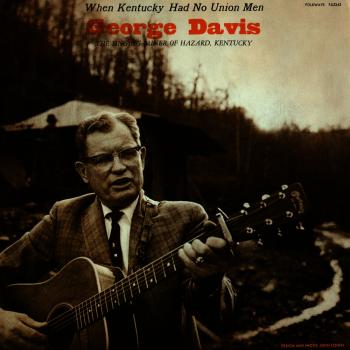
Nel disco di George Davis intitolato “When Kentucky Had No Union Men”, pubblicato nel 1967 dalla Folkways Records.
Interpretata anche da Mike Seeger nel disco “Tipple, Loom & Rail - Songs Of The Industrialization Of The South” (Folkways Records, 1966)
Poi anche nella raccolta “Songs And Ballads Of The Bituminous Miners” edita nel 2002 dalla Biblioteca del Congresso USA.
Sono moltissime le canzoni già presenti sul sito dedicate alla “Harlan War”. Se... (continua)
Per fortuna, vedendo il fil della Kopple ho scoperto che la foto di cui sopra non ritrae gun thugs al soldo dei padroni, ma minatori dell'UMW'A che difendono in armi lo sciopero... così si faceva... tempi eroici, non lontanissimi...
[1920s]
Parole e musica attribuite ad Andrew W. Jenkins (1885-1957), georgiano, cieco, pastore evangelista, prolifico compositore di musica folk, sacra e non, leader della Jenkins Family, forse il primo gruppo familiare ad incidere country music negli anni 20.
La prima incisione che trovo è del 1925, ad opera di Vernon Dalhart.
Ma esistono tantissime versioni del brano, che si trova pure nella colonna sonora del film di Barbara Kopple "Harlan County, USA" (1976) – interpretata da Phyllis Boyens con suo padre, Nimrod Workman - nell'album di George Davis "When Kentucky Had No Union Men" (1967) e nella raccolta "They'll Never Keep Us Down: Women's Coal Mining Songs" (1984)
Testo trovato su The John Quincy Wolf Folklore Collection
Della colonna sonora di "Harlan County USA" fanno parte parecchie canzoni già presenti sul sito e altre – come questa - che inserirò trovandone i testi:
1 - Coal... (continua)
A miner was leaving his home for his work (continua)




Death of the Blue Eagle concerns the ending of the short-lived NRA (National Recovery Act 1933- 1935). Apparently this U. S. Government act was vitally important to the mine workers although it was drawn up with all industries in mind. The NRA was based on the principle of industrial self-regulation under government supervision through a system of fair competition codes. It established guidelines for fair prices and wages, and invited employees and employers to sign up under the slogan "We do our part." When the NRA was declared unconstitutional due to monopolistic practices by unscrupulous members, the entire act was repealed. This song presents a popular interpretation: "the eagle (symbol of the NRA) went down shouting 'Hurray for one and all,' but most folks couldn't take it, they had to let it fall.'' The implication is strongly suggested... (continua)