
Author Bertolt Brecht
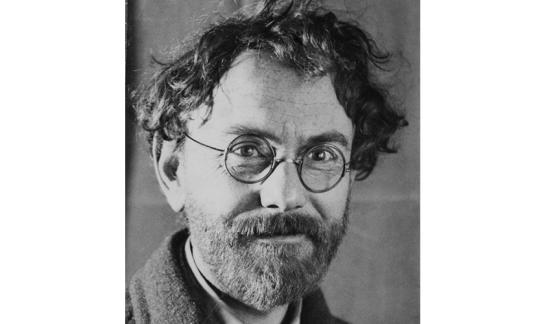
10a. Enhedsfrontsang - Versione danese di Otto Gelsted (1888-1968) [1934]
10a. Enhedsfrontsang - Danish version by Otto Gelsted (1888-1968) [1934]
Otto var søn af købmand i Middelfart Peder Jeppesen og Marie Larsen og blev døbt den 20. januar 1889. Otto blev opdraget katolsk, men vendte sig mod sin baggrund og vendte sig mod kulturradikale kredse og blev ven med blandt andre Poul Henningsen. Han var medarbejder ved dennes tidsskrift Kritisk Revy 1926-28 og var fra 1936 journalist tilknyttet Arbejderbladet og senere Politiken og Ekstra Bladet. Efter krigen blev han tilknyttet Land og Folk. Under den tyske besættelse flygtede Gelsted til Sverige, hvor han skrev "emigrantdigte". Hans digt De mørke fugle om 9. april 1940[3] vakte opsigt og blev en uofficiel nationalsang. Hans litterære virksomhed falder i tre faser: En tidlig som lyriker med debutsamlingen De evige ting i 1920. Under anden verdenskrig... (Continues)
10a. Enhedsfrontsang - Danish version by Otto Gelsted (1888-1968) [1934]
Otto var søn af købmand i Middelfart Peder Jeppesen og Marie Larsen og blev døbt den 20. januar 1889. Otto blev opdraget katolsk, men vendte sig mod sin baggrund og vendte sig mod kulturradikale kredse og blev ven med blandt andre Poul Henningsen. Han var medarbejder ved dennes tidsskrift Kritisk Revy 1926-28 og var fra 1936 journalist tilknyttet Arbejderbladet og senere Politiken og Ekstra Bladet. Efter krigen blev han tilknyttet Land og Folk. Under den tyske besættelse flygtede Gelsted til Sverige, hvor han skrev "emigrantdigte". Hans digt De mørke fugle om 9. april 1940[3] vakte opsigt og blev en uofficiel nationalsang. Hans litterære virksomhed falder i tre faser: En tidlig som lyriker med debutsamlingen De evige ting i 1920. Under anden verdenskrig... (Continues)
Enhedsfrontsang
(Continues)
(Continues)
Contributed by EinheitsBoreč 2022/4/30 - 15:57
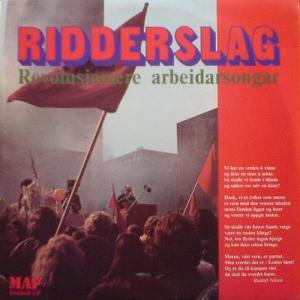
11. Enhetsfrontsang - Versione norvegese di Erik Hauglund [1976]
11. Enhetsfrontsang - Norwegian version by Erik Hauglund [1976]
Enhetsfront1 · Enhetsfrontsang
La versione norvegese di Erik Hauglund (n. 1944) risale al 1976 (album collettivo: Ridderslag, Revolusjonære Arbeidssongar, Plateselskapet Mai – MAI 7611/12 ; nell’album, interpretata dal gruppo Trondheim Underbruket). La versione norvegese sembra essere alla base di una delle versioni danesi del canto.
11. Enhetsfrontsang - Norwegian version by Erik Hauglund [1976]
Enhetsfront1 · Enhetsfrontsang
La versione norvegese di Erik Hauglund (n. 1944) risale al 1976 (album collettivo: Ridderslag, Revolusjonære Arbeidssongar, Plateselskapet Mai – MAI 7611/12 ; nell’album, interpretata dal gruppo Trondheim Underbruket). La versione norvegese sembra essere alla base di una delle versioni danesi del canto.
Enhetsfrontsang
(Continues)
(Continues)
Contributed by EinheitsBoreč 2022/5/2 - 01:02
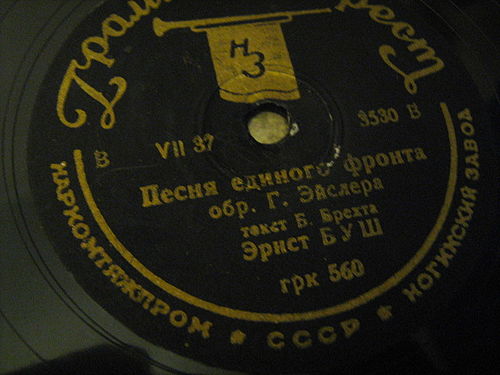
13. Песня единого фронта [Piesnia jedinovo fronta] - Versione russa di Samuil Borisovič Bolotin / Самуил Борисович Болотин e Tat’iana Sergiejevna Sikorskaja / Татьяна Сергеевна Сикорская [1935]
13. Песня единого фронта [Pyesnya yedinovo fronta] -Russian version by Samuil Borisovich Bolotin / Самуил Борисович Болотин and Tatyana Sergieyevna Sikorskaya / Татьяна Сергеевна Сикорская [1935]
«Песня Единого фронта» (нем. Einheitsfrontlied) — песня, написанная немецким композитором Хансом Эйслером на стихи Бертольта Брехта в 1934 году, когда коммунисты Германии пытались организовать единый фронт для борьбы с нацизмом. Первый и самый известный исполнитель песни — актёр и певец Эрнст Буш, для которого она и была написана. «Песня Единого фронта» приобрела широкую известность после исполнения её на Московском радио в 1936 году и вскоре зазвучала на разных языках. Среди её исполнителей были Поль... (Continues)
13. Песня единого фронта [Pyesnya yedinovo fronta] -Russian version by Samuil Borisovich Bolotin / Самуил Борисович Болотин and Tatyana Sergieyevna Sikorskaya / Татьяна Сергеевна Сикорская [1935]
«Песня Единого фронта» (нем. Einheitsfrontlied) — песня, написанная немецким композитором Хансом Эйслером на стихи Бертольта Брехта в 1934 году, когда коммунисты Германии пытались организовать единый фронт для борьбы с нацизмом. Первый и самый известный исполнитель песни — актёр и певец Эрнст Буш, для которого она и была написана. «Песня Единого фронта» приобрела широкую известность после исполнения её на Московском радио в 1936 году и вскоре зазвучала на разных языках. Среди её исполнителей были Поль... (Continues)
Песня единого фронта [1]
(Continues)
(Continues)
Contributed by EinheitsBoreč 2022/5/2 - 01:39
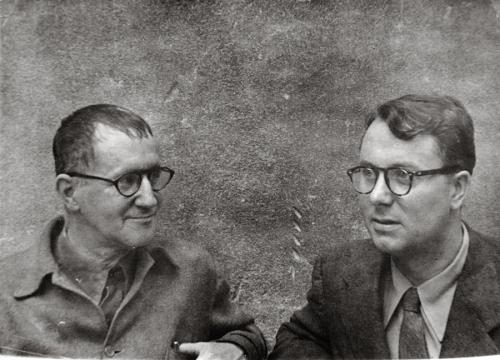
3. Song of the United Front: La versione inglese di Eric Bentley [1934]
3. Song of the United Front: Eric Bentley's English version [1934]
La versione inglese più nota (una cui strofa è utilizzata anche nella versione multilingue delle Brigate Internazionali è probabilmente anche la prima del testo originale tedesco di Bertolt Brecht: risale allo stesso anno 1934. Fu preparata dall'allora diciottenne Eric Bentley (nato a Bolton, nel Lancashire, il 14 settembre 1916) mentre studiava all'University College di Oxford (con J. R. R. Tolkien come tutor). Eric Bentley si sarebbe poi trasferito negli Stati Uniti, divenendo cittadino americano e, soprattutto, tra i più rinomati esperti e cultori internazionali di Bertolt Brecht (che conobbe personalmente nel 1948 alla University of California, a Los Angeles, e con il quale collaborò fattivamente). Eric Bentley non solo è il principale traduttore... (Continues)
3. Song of the United Front: Eric Bentley's English version [1934]
La versione inglese più nota (una cui strofa è utilizzata anche nella versione multilingue delle Brigate Internazionali è probabilmente anche la prima del testo originale tedesco di Bertolt Brecht: risale allo stesso anno 1934. Fu preparata dall'allora diciottenne Eric Bentley (nato a Bolton, nel Lancashire, il 14 settembre 1916) mentre studiava all'University College di Oxford (con J. R. R. Tolkien come tutor). Eric Bentley si sarebbe poi trasferito negli Stati Uniti, divenendo cittadino americano e, soprattutto, tra i più rinomati esperti e cultori internazionali di Bertolt Brecht (che conobbe personalmente nel 1948 alla University of California, a Los Angeles, e con il quale collaborò fattivamente). Eric Bentley non solo è il principale traduttore... (Continues)
Song of the United Front
(Continues)
(Continues)
Contributed by Riccardo Venturi 2023/2/9 - 18:11


Im Gefängnis zu singen

I have recently fallen in love with this song and am very grateful for you to have put the lyrics online.
I do think there is one mistake in it however and would encourage you to recheck the original. The last line you have as
Weil sie weder Geld noch Kanonen mehr schützt.
Ernest Busch, who, was the singer who worked with the composer Hanns Eisler, definitely does not sing an -n on Kanonen, i.e. he sings ‘Kanone’ at first this confused me and I figured it might have just been his particular pronunciation, but he sings the -n earlier on the word a few lines up. And then I realized that the -n is also wrong according to German grammar because the line means ‘Because neither money nor cannons will anymore protect you’ but whoever typed it up probably thought that ’sie’ was the subject since that would be more usual (less poetic) German word order.
I would also mention that I think some... (Continues)
I do think there is one mistake in it however and would encourage you to recheck the original. The last line you have as
Weil sie weder Geld noch Kanonen mehr schützt.
Ernest Busch, who, was the singer who worked with the composer Hanns Eisler, definitely does not sing an -n on Kanonen, i.e. he sings ‘Kanone’ at first this confused me and I figured it might have just been his particular pronunciation, but he sings the -n earlier on the word a few lines up. And then I realized that the -n is also wrong according to German grammar because the line means ‘Because neither money nor cannons will anymore protect you’ but whoever typed it up probably thought that ’sie’ was the subject since that would be more usual (less poetic) German word order.
I would also mention that I think some... (Continues)
Nathan 2025/11/17 - 13:09
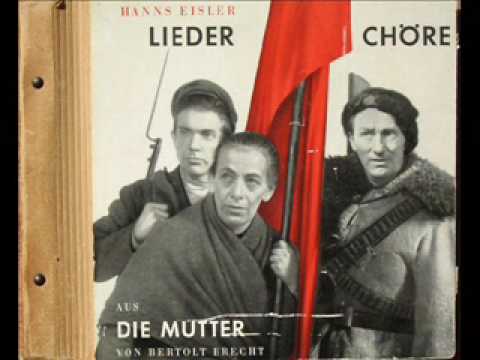
Riccardo Venturi, 18-11-2025 11:15
Da cantarsi in prigione
(Continues)
(Continues)
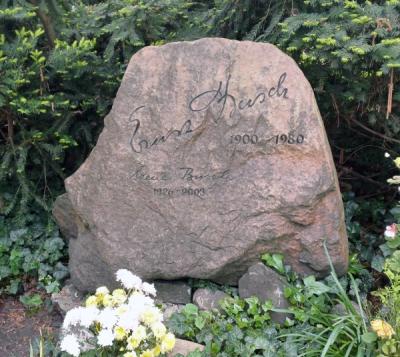
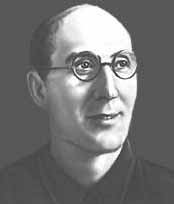
Siergiej Michailovič Tret'iakov / Сергей Михаилович Третьяков [1892-1937]
Siergiej Michailovič Tret’iakov (1892-1937) fu amico di Majakovskij, di Ejzenštejn e di Bertolt Brecht in persona. Di quest’ultimo tradusse in russo parecchie opere, tra cui Die Mutter [1933]. Occupò una delle posizioni più estreme all’interno dell’avanguardia letteraria russa degli anni ‘20 del XX secolo. Nel 1937 cadde vittima delle “purghe” staliniane, accusato di “spionaggio” (in realtà perché in stretto contatto con personalità letterarie straniere). Il 10 settembre 1937, data fissata per la sua esecuzione, sfidò per un’ultima volta le “autorità” gettandosi da una scala della prigione della Butyrka e rimanendo ucciso prima della fucilazione. Fu reabilitato postumamente nel 1956. Nel video qua sotto, un’interpretazione della versione russa della canzone (con la partecipazione di Siergiej Nievski) da parte della band Аркадий Коц (Arkadij Koc), che prende nome dallo storico traduttore russo dell’ Internazionale.
Siergiej Michailovič Tret’iakov (1892-1937) fu amico di Majakovskij, di Ejzenštejn e di Bertolt Brecht in persona. Di quest’ultimo tradusse in russo parecchie opere, tra cui Die Mutter [1933]. Occupò una delle posizioni più estreme all’interno dell’avanguardia letteraria russa degli anni ‘20 del XX secolo. Nel 1937 cadde vittima delle “purghe” staliniane, accusato di “spionaggio” (in realtà perché in stretto contatto con personalità letterarie straniere). Il 10 settembre 1937, data fissata per la sua esecuzione, sfidò per un’ultima volta le “autorità” gettandosi da una scala della prigione della Butyrka e rimanendo ucciso prima della fucilazione. Fu reabilitato postumamente nel 1956. Nel video qua sotto, un’interpretazione della versione russa della canzone (con la partecipazione di Siergiej Nievski) da parte della band Аркадий Коц (Arkadij Koc), che prende nome dallo storico traduttore russo dell’ Internazionale.
Песня из тюрьмы
(Continues)
(Continues)
Contributed by Riccardo Venturi 2025/11/18 - 18:57
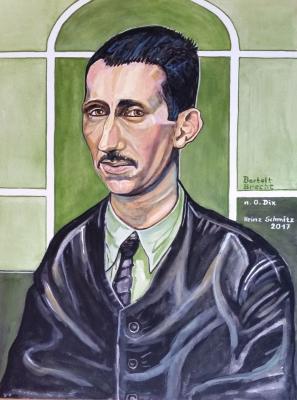
D’après la version italienne de Riccardo Venturi – Da cantarsi in prigione – 2025
D’une chanson allemande – Im Gefängnis zu singen – Bertolt Brecht – 1930-31
Texte : Bertolt Brecht
Musique : Hanns Eisler
Vers de Bertolt Brecht (en collaboration avec Hanns Eisler, Slatan Dudow et Günther Weisenborn), tirés de la pièce « Die Mutter. Leben der Revolutionärin » (« La Mère. Vie de la révolutionnaire Pelagea Wlassowa de Twer), présentée au public en 1932 et inspirée d’un récit de 1906 de l’écrivain russe Maksim Gor'kij (1868-1936). Musique de Hanns Eisler.
POUR CHANTER EN PRISON
C’est la chanson que chante Pavel, fils de Pelageja Vlasova (La Mère), emprisonné coomme révolutionnaire, avant de s’évader, puis d’être tué par la police tsariste. « Die Mutter » fut la dernière œuvre de Brecht à être représentée en Allemagne avant l’avènement du nazisme. Parmi les versions disponibles sur Internet,... (Continues)
D’une chanson allemande – Im Gefängnis zu singen – Bertolt Brecht – 1930-31
Texte : Bertolt Brecht
Musique : Hanns Eisler
Vers de Bertolt Brecht (en collaboration avec Hanns Eisler, Slatan Dudow et Günther Weisenborn), tirés de la pièce « Die Mutter. Leben der Revolutionärin » (« La Mère. Vie de la révolutionnaire Pelagea Wlassowa de Twer), présentée au public en 1932 et inspirée d’un récit de 1906 de l’écrivain russe Maksim Gor'kij (1868-1936). Musique de Hanns Eisler.
POUR CHANTER EN PRISON
C’est la chanson que chante Pavel, fils de Pelageja Vlasova (La Mère), emprisonné coomme révolutionnaire, avant de s’évader, puis d’être tué par la police tsariste. « Die Mutter » fut la dernière œuvre de Brecht à être représentée en Allemagne avant l’avènement du nazisme. Parmi les versions disponibles sur Internet,... (Continues)
Pour chanter en prison
(Continues)
(Continues)
Contributed by Marco Valdo M.I. 2025/11/19 - 19:07
Der Kanonen Song
Dall'album del 1972 "D'amore e di libertà"
John era insieme a noi come Jim
(Continues)
(Continues)
Contributed by Alberto Scotti 2025/6/30 - 01:43
Der Krieg, der kommen wird

Mit diesen aktuellen Versen Bertolt Brechts vom Jahre 1937 wünsche ich allen Freunden und Mitarbeitern dieser Internetseite friedliche Weihnachten und ein glückliches neues Jahr.
Der Krieg, der kommen wird
(Continues)
(Continues)
Contributed by Juha Rämö 2024/12/20 - 11:22
Komm mit mir nach Georgia

[1926]
Gedicht / A Poem by / Poesia / Poème / Runo:
Bertolt Brecht
Musik / Musica / Music / Musique / Sävel :
Klaus Hoffmann
Album:Ich Will Gesang, Will Spiel Und Tanz, 1977
Un anno prima della composizione dell’opera musicale teatrale Ascesa e caduta della città di Mahagonny [ Aufstieg und Fall der Stadt Mahagonny] , Brecht scrisse a Berlino le poesie della raccolta Uncollected Poems 1925–1926, relativamente poco note.
Il brano qui proposto fa parte di tale raccolta. Il tema sarà ripreso nell’opera teatrale citata con il seguente passaggio:” Credo che voglio andare in Georgia/ credo che là ci sarà una città./ Perché non potrei andare in Georgia,/se non c’é niente altro da fare?”.
Sarà ulteriormente sviluppato ne “L’opera da tre soldi”. Segue un commento sulla poesia tratto dal saggio Brecht’s America [Riccardo Gullotta]
italiano
english
Tratto da Patty Lee Parmalee, Brecht’s... (Continues)
Gedicht / A Poem by / Poesia / Poème / Runo:
Bertolt Brecht
Musik / Musica / Music / Musique / Sävel :
Klaus Hoffmann
Album:Ich Will Gesang, Will Spiel Und Tanz, 1977
Un anno prima della composizione dell’opera musicale teatrale Ascesa e caduta della città di Mahagonny [ Aufstieg und Fall der Stadt Mahagonny] , Brecht scrisse a Berlino le poesie della raccolta Uncollected Poems 1925–1926, relativamente poco note.
Il brano qui proposto fa parte di tale raccolta. Il tema sarà ripreso nell’opera teatrale citata con il seguente passaggio:” Credo che voglio andare in Georgia/ credo che là ci sarà una città./ Perché non potrei andare in Georgia,/se non c’é niente altro da fare?”.
Sarà ulteriormente sviluppato ne “L’opera da tre soldi”. Segue un commento sulla poesia tratto dal saggio Brecht’s America [Riccardo Gullotta]
italiano
english
Tratto da Patty Lee Parmalee, Brecht’s... (Continues)
Sieh, diese Stadt
(Continues)
(Continues)
Contributed by Riccardo Gullotta 2025/4/21 - 00:39
Resolution der Kommunarden
Italienische Version 2 / Versione italiana 2 / Italian version 2 / Version italienne 2 / Italiankielinen versio 2: Francesco Mazzocchi
Propongo due correzioni di punteggiatura al testo originale sopra riportato, basandomi su quello completo trovato qui: Bertolt Brecht - Resolution der Kommunarden. Si dovrebbe mettere un punto alla fine del secondo verso (knechten soll’n.), e un trattino alla fine del quartultimo (auf Kanonen -). Sulla versione del Pietrangeli noto che manca la traduzione di una strofa (quella sul carbone), e propongo una nuova traduzione più letterale, volendo rendere meglio il tono quasi burocraticamente secco delle risoluzioni. [Francesco Mazzocchi]
Risoluzione dei Comunardo
(Continues)
(Continues)
Contributed by Francesco Mazzocchi 2024/6/25 - 15:03
Lied der Seeräuber-Jenny

Vorrei solo proporre l’annotazione che la sopra riportata «versione italiana dal libretto dell'opera rappresentato al Teatro Regio di Torino nel 2004» è di Emilio Castellani (Milano, 1911 – 1985), uno dei principali traduttori di Brecht. Nell’immediato dopoguerra fu pubblicata nel 1946 a Milano da Rosa e Ballo, e poi a Torino, da Einaudi a partire dal 1956. Questa è la traduzione più fedele al testo originale.
Francesco Mazzocchi 2024/6/25 - 11:52
Winterspruch
Med dessa verser önskar jag alla medarbetare och vänner av denna webbplats en fridful jul och gott nytt år 2024.
MED TANKE PÅ VINTERN (Continues)
Contributed by Juha Rämö 2023/12/20 - 20:01
Die jüdische Frau [Furcht und Elend des Dritten Reiches]
![Die jüdische Frau [Furcht und Elend des Dritten Reiches]](img/upl/dsc_3795.jpg)
[1938]
Text / Testo / Lyrics / Paroles / Sanat:
Bertolt Brecht
Interpretiert von / Interpreti / Performed by / Interprétée par / Laulavat :
Emanuela Scipioni
…Ma ricordati sempre che i mostri non muoiono. Quello che muore è la paura che t'incutono [Cesare Pavese , Dialoghi con Leucò- La rupe]
L'opera teatrale Terrore e miseria del Terzo Reich fu presentata per la prima volta a Parigi il 21 Maggio 1938 con il titolo 99% e sottotitolo Images du Troisième Reich. Si compone di 30 scene. La nona si intitola La moglie ebrea.
Se ne propone qui uno stralcio, magistralmente interpretato da Emanuela Scipioni.
[Riccardo Gullotta]
Text / Testo / Lyrics / Paroles / Sanat:
Bertolt Brecht
Interpretiert von / Interpreti / Performed by / Interprétée par / Laulavat :
Emanuela Scipioni
…Ma ricordati sempre che i mostri non muoiono. Quello che muore è la paura che t'incutono [Cesare Pavese , Dialoghi con Leucò- La rupe]
L'opera teatrale Terrore e miseria del Terzo Reich fu presentata per la prima volta a Parigi il 21 Maggio 1938 con il titolo 99% e sottotitolo Images du Troisième Reich. Si compone di 30 scene. La nona si intitola La moglie ebrea.
Se ne propone qui uno stralcio, magistralmente interpretato da Emanuela Scipioni.
[Riccardo Gullotta]
[…]In der letzten Zeit habe ich oft daran gedacht, wie du mir vor Jahren sagtest, es gäbe wertvolle Menschen und weniger wertvolle, und die einen bekämen Insulin, wenn sie Zucker haben und die andern bekämen keins. Und das habe ich eingesehen, ich Dummkopf!
(Continues)
(Continues)
Contributed by Riccardo Gullotta 2023/8/19 - 09:09
Song Itineraries:
Ghettos
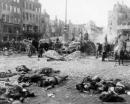
An die Gleichgeschalteten

[1935]
Poesia di Bertolt Brecht / A poem by Bertolt Brecht / Poème de Bertolt Brecht / Bertolt Brechtin runo
Musica / Music / Musique / Sävel: Christof Herzog
Canta / Singer / Chante / Laulaa: Christa Weber
Il concetto di Gleichschaltung è passato alla storia nella sua denominazione in lingua tedesca. Come molti termini tipici dei regimi totalitari, ha un'origine tecnica: propriamente significa “sincronizzazione” (di macchinari, di dispositivi). Col regime nazista, il passaggio a tutta una serie di provvedimenti-chiave tesi alla realizzazione di un processo collettivista per esercitare il controllo totale sull'individuo mediante la coordinazione di tutti gli aspetti della società (dalla politica al commercio, dall'amministrazione alla cultura) fu assai breve, anche e soprattutto perché era programmatico. Ogni forma di individualismo doveva essere semplicemente eliminata. Tra il 1933 e... (Continues)
Poesia di Bertolt Brecht / A poem by Bertolt Brecht / Poème de Bertolt Brecht / Bertolt Brechtin runo
Musica / Music / Musique / Sävel: Christof Herzog
Canta / Singer / Chante / Laulaa: Christa Weber
Il concetto di Gleichschaltung è passato alla storia nella sua denominazione in lingua tedesca. Come molti termini tipici dei regimi totalitari, ha un'origine tecnica: propriamente significa “sincronizzazione” (di macchinari, di dispositivi). Col regime nazista, il passaggio a tutta una serie di provvedimenti-chiave tesi alla realizzazione di un processo collettivista per esercitare il controllo totale sull'individuo mediante la coordinazione di tutti gli aspetti della società (dalla politica al commercio, dall'amministrazione alla cultura) fu assai breve, anche e soprattutto perché era programmatico. Ogni forma di individualismo doveva essere semplicemente eliminata. Tra il 1933 e... (Continues)
Um sein Brot nicht zu verlieren, in den Zeiten zunehmender Unterdrückung, beschließt mancher, die Wahrheit über die Verbrechen des Regimes bei der Aufrechterhaltung der Ausbeutung nicht mehr zu sagen, aber auch die Lügen des Regimes nicht zu verbreiten, also zwar nichts zu enthüllen, aber auch nichts zu beschönigen.
(Continues)
(Continues)
Contributed by Riccardo Venturi 2023/2/3 - 05:57

Riccardo Venturi, 3-2-2023 05:58
Ai Messi in Riga
(Continues)
(Continues)
Die Legende der Dirne Evelyn Roe
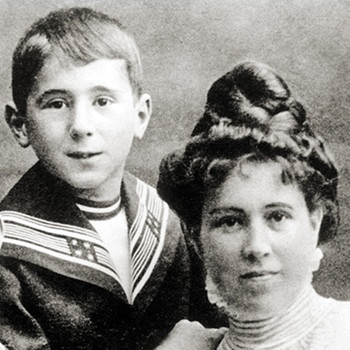
[1917]
Poesia di / A poem by / Poème de Bertolt Brecht – Bertolt Brechtin runo
Musica / Music / Musique / Sävel: Hans-Dieter Hosalla (1919-1995)
Molti credono che Bertolt Brecht sia nato marxista, e che i suoi primi vagiti siano stati i versi dell'Interrnazionale (peraltro non ancora tradotti in tedesco, visto che Bert era del 1898). Invece no: al marxismo, Brecht arrivò non prima degli anni '30. In compenso, Bertolt Brecht era nato Bertolt Brecht, e in quel lasso di tempo adolescenziale, giovanile e “premarxista” scrisse un sacco di poesie di Bertolt Brecht -quasi tutte, prima o poi, messe in musica e cantate: si vedeva subito che quel ragazzaccio aveva talento come paroliere. Cominciò a scriverne a quindici anni, nel 1913; e questa appartiene, appunto, grosso modo a quel periodo dal 1913 al 1930. A volte, lo dico chiaramente, non mi va di fare il “filologo”: tutto questo per dire che... (Continues)
Poesia di / A poem by / Poème de Bertolt Brecht – Bertolt Brechtin runo
Musica / Music / Musique / Sävel: Hans-Dieter Hosalla (1919-1995)
Molti credono che Bertolt Brecht sia nato marxista, e che i suoi primi vagiti siano stati i versi dell'Interrnazionale (peraltro non ancora tradotti in tedesco, visto che Bert era del 1898). Invece no: al marxismo, Brecht arrivò non prima degli anni '30. In compenso, Bertolt Brecht era nato Bertolt Brecht, e in quel lasso di tempo adolescenziale, giovanile e “premarxista” scrisse un sacco di poesie di Bertolt Brecht -quasi tutte, prima o poi, messe in musica e cantate: si vedeva subito che quel ragazzaccio aveva talento come paroliere. Cominciò a scriverne a quindici anni, nel 1913; e questa appartiene, appunto, grosso modo a quel periodo dal 1913 al 1930. A volte, lo dico chiaramente, non mi va di fare il “filologo”: tutto questo per dire che... (Continues)
Als der Frühling kam und das Meer war blau
(Continues)
(Continues)
Contributed by Riccardo Venturi 2023/1/31 - 01:59
Der Pflaumenbaum

Un omaggio alla poesia di Bertolt Brecht “Der Pflaumenbaum” (” Il susino”) di Bertolt Brecht viene pubblicato nel 1939 nella raccolta Svendborger Gedichte e fa parte della sezione dei Kinderlied. Composta nel 1934 (quando Brecht si trovava in Danimarca, nel paese di Svendborg, per sfuggire al regime nazista) “Il susino” è una poesia sulla solitudine, la sofferenza e l’esilio ma, nello stesso tempo, è una poesia sulla forza che nasce dalle avversità.
Ho dato a questa bella poesia una musica facile all'ascolto e al canto anche per i bambini.
IL SUSINO
(Continues)
(Continues)
2023/1/30 - 15:17
Der Pflaumenbaum
Io questa poesia in questa bellissima traduzione di Franco Fortini la recitavo a mia figlia quando era piccola e l'ho imparata a memoria. Imparare una poesia a memoria, se non lo fai per obbligo scolastico, ti rimane per sempre
Giovanni Schiavo Campo 2022/9/3 - 03:54
×
![]()

10. Enhedsfrontsang - Danish version by Røde Mor [1972]
Album: Ta' hva' der er dit ["Take What Is Yours"]
Røde Mor: Enhedsfrontsang [2002 Digital Remaster]