




I got the key to the highway
And I'm billed out and bound to go
I'm gonna leave here runnin'
'Cause walkin' is most too slow.
I'm goin' down on the border
Now, where I'm better known
'Cause, woman, you don't do nothin'
But drive a good man 'way from home.
Now, when the moon peeps over the mountain
I'll be on my way
Now, I'm gonna walk this old highway
Until the break of day.
Run here, sweet mama
Now, and help me with this heavy load
I am due in West Texas
And I've got to get on the road.
I'm goin' to West Texas
I'm goin' down behind the sun
I'm gonna ask the Good Lord
"What evil have I done?".
And I'm billed out and bound to go
I'm gonna leave here runnin'
'Cause walkin' is most too slow.
I'm goin' down on the border
Now, where I'm better known
'Cause, woman, you don't do nothin'
But drive a good man 'way from home.
Now, when the moon peeps over the mountain
I'll be on my way
Now, I'm gonna walk this old highway
Until the break of day.
Run here, sweet mama
Now, and help me with this heavy load
I am due in West Texas
And I've got to get on the road.
I'm goin' to West Texas
I'm goin' down behind the sun
I'm gonna ask the Good Lord
"What evil have I done?".
inviata da Pluck - 18/2/2025 - 21:35
Lingua: Inglese
Versione di Mance Lipscom
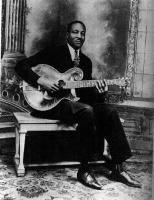
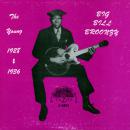
"Key To The Highway" è un blues associato a Big Bill Broonzy, ma il realtà fu registrato per la prima volta dal pianista Charlie Segar nel febbraio del 1940. Pochi mesi dopo, Broonzy suonò la chitarra in una versione di Jazz Gillum, prima di registrare la propria versione nel 1941 (con Gillum che ricambiò il favore suonando l'armonica in quella cover). Tutti e tre rivendicarono la paternità del brano. La versione di Big Bill Broonzy è quella più nota.
Tra i numerosi musicisti blues che ne hanno successivamente inciso versioni figurano John Lee Hooker, B.B. King, Freddie King, Brownie McGhee e Sonny Terry, Buddy Guy, Muddy Waters.
Probabilmente una delle versioni più belle è quella di Jimmy Witherspoon, con lo splendido accompagnamento al sassofono tenore di Ben Webster.
Il maestro dell'armonica Little Walter nel 1958 adattò il brano al sound del blues di Chicago, suonando con una talentuosa band che includeva Otis Spann al pianoforte, Willie Dixon al basso e Muddy Waters alla chitarra.
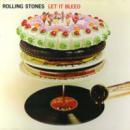
I Rolling Stones registrarono una versione di "Key To The Highway" ai Chess Studios nel novembre del 1964, rimasta inedita per anni.
Eric Clapton ha suonato il brano più volte nel corso della sua carriera.
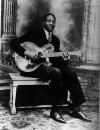
Questa versione di Mance Lipscomb è stata registrata a Berkeley, California, il 2 maggio 1964.
Lipscomb ha aggiunto numerose strofe. Le prime tre sono quasi uguali, con piccole differenze, alla 'classica' versione di Big Bill Broonzy (vedi CCG). La decima strofa è uguale alla quinta strofa di "Captain, Captain" dello stesso Lipscomb (vedi CCG).
"Key To The Highway" è un blues associato a Big Bill Broonzy, ma il realtà fu registrato per la prima volta dal pianista Charlie Segar nel febbraio del 1940. Pochi mesi dopo, Broonzy suonò la chitarra in una versione di Jazz Gillum, prima di registrare la propria versione nel 1941 (con Gillum che ricambiò il favore suonando l'armonica in quella cover). Tutti e tre rivendicarono la paternità del brano. La versione di Big Bill Broonzy è quella più nota.
Tra i numerosi musicisti blues che ne hanno successivamente inciso versioni figurano John Lee Hooker, B.B. King, Freddie King, Brownie McGhee e Sonny Terry, Buddy Guy, Muddy Waters.
Probabilmente una delle versioni più belle è quella di Jimmy Witherspoon, con lo splendido accompagnamento al sassofono tenore di Ben Webster.
Il maestro dell'armonica Little Walter nel 1958 adattò il brano al sound del blues di Chicago, suonando con una talentuosa band che includeva Otis Spann al pianoforte, Willie Dixon al basso e Muddy Waters alla chitarra.
I Rolling Stones registrarono una versione di "Key To The Highway" ai Chess Studios nel novembre del 1964, rimasta inedita per anni.
Eric Clapton ha suonato il brano più volte nel corso della sua carriera.
Questa versione di Mance Lipscomb è stata registrata a Berkeley, California, il 2 maggio 1964.
Lipscomb ha aggiunto numerose strofe. Le prime tre sono quasi uguali, con piccole differenze, alla 'classica' versione di Big Bill Broonzy (vedi CCG). La decima strofa è uguale alla quinta strofa di "Captain, Captain" dello stesso Lipscomb (vedi CCG).
KEY TO THE HIGHWAY
Got the key to the highway, I’m billed out and I’m bound to go
Gonna leave here running, walking got too doggone slow
I'm going down on the levee, people, where I'm better known
You don’t do nothing, but drive a good man from his home
When the moon gets over the mountain, I'll be somewhere on my way
Gonna roam this old highway, until the break of day
I’m going out yonder, look up at that rising sun
Gon’ ask the good Lord, what evil have I done
I’m going down on the highway, try to catch me a ride
Nobody seem to know me, they kept on passing by
This time tomorrow, wonder where will I be?
Somewhere walking up and down, man, that old Santa Fe
My best girl she quit me, throwed all my clothes outdoor
That’s alright, woman, you got to reap just what you sow
‘Cause I got the key to this highway, billed out and I’m bound to go
Gonna leave here running, walking got too, too slow
You been running round here, baby, in your brand new automobile
With some other man, you don’t care how you make me feel
Six months ain’t so long, two years ain’t no great long time
Got a friend in penitentiary, doing ninety-nine
Got the key to that old highway, I say, billed out and I’m got to go
Gonna leave here running, walking is most too slow
'Cause I’m going down on the borders, people, where I'm better known
You don’t do nothing, but drive a good man from his home
Give me one sweet kiss, baby, oh, before I go
Gonna leave here, and I ain’t coming back no more
Got the key to the highway, I’m billed out and I’m bound to go
Gonna leave here running, walking got too doggone slow
I'm going down on the levee, people, where I'm better known
You don’t do nothing, but drive a good man from his home
When the moon gets over the mountain, I'll be somewhere on my way
Gonna roam this old highway, until the break of day
I’m going out yonder, look up at that rising sun
Gon’ ask the good Lord, what evil have I done
I’m going down on the highway, try to catch me a ride
Nobody seem to know me, they kept on passing by
This time tomorrow, wonder where will I be?
Somewhere walking up and down, man, that old Santa Fe
My best girl she quit me, throwed all my clothes outdoor
That’s alright, woman, you got to reap just what you sow
‘Cause I got the key to this highway, billed out and I’m bound to go
Gonna leave here running, walking got too, too slow
You been running round here, baby, in your brand new automobile
With some other man, you don’t care how you make me feel
Six months ain’t so long, two years ain’t no great long time
Got a friend in penitentiary, doing ninety-nine
Got the key to that old highway, I say, billed out and I’m got to go
Gonna leave here running, walking is most too slow
'Cause I’m going down on the borders, people, where I'm better known
You don’t do nothing, but drive a good man from his home
Give me one sweet kiss, baby, oh, before I go
Gonna leave here, and I ain’t coming back no more
inviata da Marcello Tagliabue - 8/11/2025 - 15:28
×
![]()

“Key to the Highway” is a blues standard that has been performed and recorded by several blues and other artists. Blues pianist Charlie Segar first recorded the song in 1940. Jazz Gillum and Big Bill Broonzy followed with recordings in 1940 and 1941, using an arrangement that has become the standard.
When Little Walter updated the song in 1958 in an electric Chicago blues style, it became a success on the R&B record chart. A variety of artists have since interpreted the song, including Eric Clapton, who recorded several versions. (Wikipedia)
Key to the Highway, recorded by Charles Segar, Big Bill Broonzy, Little Walter, and many others:
As far as I know, nobody has ever called this classic blues a song of protest, but I believe that it is quite likely that it was used to express protest. I've identified it as a protest song partly because of its similarity to "Key to the Bushes." You can see that similarity in the first verses of Charles Segar's recording of "Key to the Highway" (the very first recording of the song) and Tucker's "Key to the Bushes."
"I got the key to the highway, I’m rarin’ to go (twice) / ‘Cause I’m gonna leave here runnin, walkin’s most too slow".
"I’ve got the key to the bushes, and I’m rarin’ to go (twice) / I ought to leave her running, but that’s most too slow".
My article presents a detailed discussion on "Key to the Highway" that explains additional reasons why I believe African Americans sang and interpreted this song as a song of racial protest (even though its lyrics are ostensibly about a man telling his mistreating woman that he plans to leave her and never return). The discussion includes the following quote from Willie Foster, a man who once played blues harp in Muddy Waters's legendary band:
"Back in the thirties, I was old enough to sharecrop with and without my parents. And we couldn’t move when we wanted to move. And so we would sing some indirect songs. With the indirect—when you singin’ the song, you be singin’ to the man that you can’t tell you gonna leave. ‘Cause if you tell him you gonna leave, he’d say, Well go down there and burn him up in his house or kill him. Kill that man. He’s gonna leave ya. He’s talkin’ about runnin’ off. I ain’t gonna give him nuthin’. So that’s where, that’s where that indirect song comin’ at—“Oh baby I’m gonna leave you. Baby you won’t treat me right”— callin’ the bossman baby. That’s indirect, that’s through your wife to the bossman".
Willie Foster
Social (racial) protest in the blues | Steve Hoffman Music Forums p.1 #3