



Deep river
My home is over Jordan
Deep river, Lord
I want to cross over into campground.
Deep river
My home is over Jordan
Deep river, Lord
I want to cross over into campground.
Oh, don't you want to go
To the Gospel feast
That Promised Land
Where all is peace?
Oh, deep river, Lord
I want to cross over into campground.
My home is over Jordan
Deep river, Lord
I want to cross over into campground.
Deep river
My home is over Jordan
Deep river, Lord
I want to cross over into campground.
Oh, don't you want to go
To the Gospel feast
That Promised Land
Where all is peace?
Oh, deep river, Lord
I want to cross over into campground.
(1) ”Campground" (campo) indica un luogo di raduno, un tipo di incontro che, sebbene illegale in alcune zone, serviva agli schiavi per comunicare e condividere i propri dolori e le proprie speranze. Questi raduni erano tra le rare occasioni in cui gli schiavi potevano effettivamente provare la sensazione di libertà, almeno per un po', cantando, suonando strumenti e condividendo storie. Alcuni dei testi hanno probabilmente anche un doppio significato, suggerendo che il raduno che cercavano era in Paradiso, il luogo dove sarebbero stati veramente liberi.
Con la fine della guerra civile americana nel 1865 e l'emancipazione ufficiale degli schiavi nel Sud, il canto degli spirituals scomparve per un breve periodo. Ben presto, però, la Fisk University di Nashville inviò il suo coro composto interamente da afroamericani in un tour mondiale per raccogliere fondi per l'istruzione degli schiavi appena liberati nel Tennessee e negli Stati circostanti. I Fisk Jubilee Singers portarono gli spiritual, tra cui “Deep River”, in parti degli Stati Uniti che non avevano mai sentito questo tipo di musica prima d'allora. Si esibirono anche per varie famiglie reali europee - una novità assoluta negli anni '70 dell'Ottocento - e il loro successo incoraggiò altri college afroamericani e cantanti professionisti a formare gruppi itineranti. Cominciarono ad apparire raccolte pubblicate di “canzoni delle piantagioni” per soddisfare la crescente domanda di questo genere musicale da parte del pubblico.
La persona che più di tutte contribuì a portare questa musica così sentita all'attenzione dell'intero Paese fu Henry Thacker Burleigh. “Harry” Burleigh (nato nel 1866) era un cantante e compositore di formazione classica e divenne l'assistente di fiducia del grande compositore europeo Antonín Dvorˇ ák quando questi visse in America negli anni '90 del XIX secolo. Burleigh aiutò Dvorˇ ák nella trascrizione della sua nuova opera maestra, “La Sinfonia dal Nuovo Mondo”. Su richiesta di Dvorˇ ák, Burleigh cantò anche per lui alcuni spiritual, canzoni che aveva imparato da suo padre, un uomo cieco che era stato schiavo. Dvorˇ ák scelse “Deep River” come un importante brano musicale che, a suo avviso, avrebbe dovuto essere utilizzato nella creazione di una nuova musica classica americana.
Fu Burleigh a modificare la linea musicale di “Deep River” arrangiandola per recital classici. Rallentò anche il tempo rispetto alla versione dei Fisk Jubilee Singers, che probabilmente era più vicina a come veniva cantata dai braccianti durante il lavoro. Gli arrangiamenti, prima nel 1913 per coro misto "a cappella" con influenze della composizione di Dvorak, e poi nel 1916 per cantante solista e pianoforte, ebbero un effetto monumentale. “Deep River” fu inclusa nella raccolta di “Twenty-Four Negro Melodies” trascritta per pianoforte da Samuel Coleridge-Taylor e pubblicata da Oliver Ditson nel 1905. La straordinaria popolarità di “Deep River” che ne seguì non poteva essere prevista. Nel 1910, una violinista famosa dell'epoca, Maud Powell, fu ispirata a trascrivere “Deep River” basandosi sul lavoro di Coleridge-Taylor. Quando eseguì “Deep River” durante il suo recital a New York nell'ottobre 1911, fu la prima volta che un'artista solista bianca, formatasi nella tradizione della musica classica europea, eseguiva un spiritual afroamericano in concerto. Powell registrò “Deep River” per la Victor Company il 15 giugno 1911: la prima versione mai registrata.
Dopo che “Deep River” fu cantata in diversi film negli anni '20 e la melodia fu adattata in un'altra canzone popolare, “Dear Old Southland”, nel 1921, la sua popolarità continuò anche nella generazione successiva. Il violinista virtuoso di fama mondiale Jascha Heifetz registrò il suo arrangiamento della melodia per violino solo negli anni '40. Johnny Mathis e molti altri cantanti registrarono la canzone a partire dagli anni '50. Oggi i gruppi gospel includono spesso “Deep River” nei loro programmi.
Tra le numerose interpretazioni di questo spiritual, quella della soprano afroamericana Marian Anderson è forse la versione più memorabile di “Deep River”. All'inizio del 1900, questa giovane studentessa di talento fece domanda per entrare nella Philadelphia Music Academy (ora University of the Arts), frequentata esclusivamente da bianchi, ma fu respinta a causa della sua etnia. La sua “High School” intervenne allora e organizzò un'audizione al di fuori della istituzione accademica [“for private study”] con Giuseppe Boghetti e Agnes Reifsnyder, due insegnanti di canto molto rispettati all'epoca. All'audizione, l'esecuzione di “Deep River” da parte della Anderson commosse Boghetti fino alle lacrime. Anni dopo, nel 1939, le Figlie della Rivoluzione Americana (DAR) rifiutarono di concedere ad Anderson il permesso di cantare nell'auditorium di una scuola superiore pubblica frequentata esclusivamente da bianchi e le negarono anche il permesso di cantare davanti a un pubblico misto nella Constitution Hall di Washington D.C. Le DAR contavano migliaia di membri, tra cui la First Lady Eleanor Roosevelt. Ci fu grande indignazione da parte di molti, ma in particolare da parte della stessa signora Roosevelt, che si dimise dall'organizzazione per questo motivo. Più tardi quello stesso anno, con l'aiuto del presidente Roosevelt, la First Lady organizzò un recital per Marian Anderson sui gradini del Lincoln Memorial. Al recital assistettero 75.000 persone e milioni di persone ascoltarono alla radio in tutto il paese Marian Anderson cantare “Deep River”.
L'interpretazione piena di sentimento di Marian Anderson di questa vecchia canzone degli schiavi toccò il cuore di milioni di americani e dimostrò l'enorme potere della musica di trasmettere sofferenza, speranza e storia. Quindici anni dopo, nel 1955, Marian Anderson divenne la prima afroamericana ad essere invitata a cantare al Metropolitan Opera di New York City.
Nota.
* L'Ohio è un fiume degli Stati Uniti d'America lungo 1.579 Km., principale affluente di sinistra del Mississippi, nonché quello con la maggior portata d'acqua.
Ha origine nella Pennsylvania occidentale.
Interessa sei stati americani: Pennsylvania, Ohio, Virginia Occidentale, Kentucky, Indiana e Illinois. Il fiume segna il confine meridionale dello stato dell'Ohio e attraversa o delimita altri stati prima di sfociare nel fiume Mississippi a Cairo (Illinois).
Wikipedia
Con la fine della guerra civile americana nel 1865 e l'emancipazione ufficiale degli schiavi nel Sud, il canto degli spirituals scomparve per un breve periodo. Ben presto, però, la Fisk University di Nashville inviò il suo coro composto interamente da afroamericani in un tour mondiale per raccogliere fondi per l'istruzione degli schiavi appena liberati nel Tennessee e negli Stati circostanti. I Fisk Jubilee Singers portarono gli spiritual, tra cui “Deep River”, in parti degli Stati Uniti che non avevano mai sentito questo tipo di musica prima d'allora. Si esibirono anche per varie famiglie reali europee - una novità assoluta negli anni '70 dell'Ottocento - e il loro successo incoraggiò altri college afroamericani e cantanti professionisti a formare gruppi itineranti. Cominciarono ad apparire raccolte pubblicate di “canzoni delle piantagioni” per soddisfare la crescente domanda di questo genere musicale da parte del pubblico.
La persona che più di tutte contribuì a portare questa musica così sentita all'attenzione dell'intero Paese fu Henry Thacker Burleigh. “Harry” Burleigh (nato nel 1866) era un cantante e compositore di formazione classica e divenne l'assistente di fiducia del grande compositore europeo Antonín Dvorˇ ák quando questi visse in America negli anni '90 del XIX secolo. Burleigh aiutò Dvorˇ ák nella trascrizione della sua nuova opera maestra, “La Sinfonia dal Nuovo Mondo”. Su richiesta di Dvorˇ ák, Burleigh cantò anche per lui alcuni spiritual, canzoni che aveva imparato da suo padre, un uomo cieco che era stato schiavo. Dvorˇ ák scelse “Deep River” come un importante brano musicale che, a suo avviso, avrebbe dovuto essere utilizzato nella creazione di una nuova musica classica americana.
Fu Burleigh a modificare la linea musicale di “Deep River” arrangiandola per recital classici. Rallentò anche il tempo rispetto alla versione dei Fisk Jubilee Singers, che probabilmente era più vicina a come veniva cantata dai braccianti durante il lavoro. Gli arrangiamenti, prima nel 1913 per coro misto "a cappella" con influenze della composizione di Dvorak, e poi nel 1916 per cantante solista e pianoforte, ebbero un effetto monumentale. “Deep River” fu inclusa nella raccolta di “Twenty-Four Negro Melodies” trascritta per pianoforte da Samuel Coleridge-Taylor e pubblicata da Oliver Ditson nel 1905. La straordinaria popolarità di “Deep River” che ne seguì non poteva essere prevista. Nel 1910, una violinista famosa dell'epoca, Maud Powell, fu ispirata a trascrivere “Deep River” basandosi sul lavoro di Coleridge-Taylor. Quando eseguì “Deep River” durante il suo recital a New York nell'ottobre 1911, fu la prima volta che un'artista solista bianca, formatasi nella tradizione della musica classica europea, eseguiva un spiritual afroamericano in concerto. Powell registrò “Deep River” per la Victor Company il 15 giugno 1911: la prima versione mai registrata.
Dopo che “Deep River” fu cantata in diversi film negli anni '20 e la melodia fu adattata in un'altra canzone popolare, “Dear Old Southland”, nel 1921, la sua popolarità continuò anche nella generazione successiva. Il violinista virtuoso di fama mondiale Jascha Heifetz registrò il suo arrangiamento della melodia per violino solo negli anni '40. Johnny Mathis e molti altri cantanti registrarono la canzone a partire dagli anni '50. Oggi i gruppi gospel includono spesso “Deep River” nei loro programmi.
Tra le numerose interpretazioni di questo spiritual, quella della soprano afroamericana Marian Anderson è forse la versione più memorabile di “Deep River”. All'inizio del 1900, questa giovane studentessa di talento fece domanda per entrare nella Philadelphia Music Academy (ora University of the Arts), frequentata esclusivamente da bianchi, ma fu respinta a causa della sua etnia. La sua “High School” intervenne allora e organizzò un'audizione al di fuori della istituzione accademica [“for private study”] con Giuseppe Boghetti e Agnes Reifsnyder, due insegnanti di canto molto rispettati all'epoca. All'audizione, l'esecuzione di “Deep River” da parte della Anderson commosse Boghetti fino alle lacrime. Anni dopo, nel 1939, le Figlie della Rivoluzione Americana (DAR) rifiutarono di concedere ad Anderson il permesso di cantare nell'auditorium di una scuola superiore pubblica frequentata esclusivamente da bianchi e le negarono anche il permesso di cantare davanti a un pubblico misto nella Constitution Hall di Washington D.C. Le DAR contavano migliaia di membri, tra cui la First Lady Eleanor Roosevelt. Ci fu grande indignazione da parte di molti, ma in particolare da parte della stessa signora Roosevelt, che si dimise dall'organizzazione per questo motivo. Più tardi quello stesso anno, con l'aiuto del presidente Roosevelt, la First Lady organizzò un recital per Marian Anderson sui gradini del Lincoln Memorial. Al recital assistettero 75.000 persone e milioni di persone ascoltarono alla radio in tutto il paese Marian Anderson cantare “Deep River”.
L'interpretazione piena di sentimento di Marian Anderson di questa vecchia canzone degli schiavi toccò il cuore di milioni di americani e dimostrò l'enorme potere della musica di trasmettere sofferenza, speranza e storia. Quindici anni dopo, nel 1955, Marian Anderson divenne la prima afroamericana ad essere invitata a cantare al Metropolitan Opera di New York City.
Nota.
* L'Ohio è un fiume degli Stati Uniti d'America lungo 1.579 Km., principale affluente di sinistra del Mississippi, nonché quello con la maggior portata d'acqua.
Ha origine nella Pennsylvania occidentale.
Interessa sei stati americani: Pennsylvania, Ohio, Virginia Occidentale, Kentucky, Indiana e Illinois. Il fiume segna il confine meridionale dello stato dell'Ohio e attraversa o delimita altri stati prima di sfociare nel fiume Mississippi a Cairo (Illinois).
Wikipedia
Contributed by Pluck - 2025/11/25 - 17:58
×
![]()
Note for non-Italian users: Sorry, though the interface of this website is translated into English, most commentaries and biographies are in Italian and/or in other languages like French, German, Spanish, Russian etc.

L’Autore dell’articolo allegato suggerisce infatti che il fiume Giordano, citato in Deep River, puo’ simboleggiare il fiume Ohio*,naturale confine divisorio fra gli stati schiavisti del Sud degli Stati Uniti e gli stati liberi del Nord e ultimo ostacolo da affrontare per raggiungere l’obiettivo finale della fuga , la liberta’.
There are three general categories of spirituals, two of them being up-tempo. Today, “Deep River” belongs to the third group: slow, haunting melodies filled with emotion and faith and embodying the soul crying out in the universal longing for freedom. Through the melodies and lyrics of their spirituals the slaves expressed not only their own personal weariness and sorrow but also their hope and determination to overcome and live on. These songs of hope were partially engendered by the slaves’ newfound belief in the teachings of the Christian Bible. Differing from African cultures they knew, the Christian doctrine of a Heaven promising a glorious afterlife for suffering people was new to them and provided much-needed hope. It was not unusual for slaves and their masters or owners to attend daily or weekly church services together. In time, the slave populations embraced Christianity and believed that the religion of their European American captors would provide “deliverance” for them as well.
Most of the lyrics contained in the now-documented over 6,000 traditional spirituals echo the language of the Old Testament. The creators of spirituals quoted the Bible often in the lyrics, perhaps identifying with the Israelites in Africa whose enslavement and persecution was vividly portrayed in the Old Testament. The lyrics of this song - “deep river….my home is over Jordan….deep river, Lord, I want to cross over into campground” - imply that the Jordan River in the Bible symbolizes the Ohio River, a dividing line between the slave states and the free states. “Campground” implies a place for camp meetings, a type of gathering that, even though illegal in some areas, served as a vehicle for slaves to commune and share their sorrows and hopes. These camp meetings were among the rare occasions during which slaves could actually experience feeling free for at least a little while through singing, playing instruments and sharing stories. Some of the lyrics most likely have a double meaning as well suggesting that the camp meeting they looked for was in Heaven, the place where they would truly be set free.
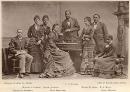
With the end of the American Civil War in 1865 and the official emancipation of slaves in the South, the singing of spirituals died out for a short period. Soon, though, Fisk University in Nashville sent its all-African American choir on a world tour raising funds for educating newly freed slaves in Tennessee and surrounding States. The Fisk Jubilee Singers carried spirituals including “Deep River” to parts of the U.S. that had never before heard this type of music. They also performed for various European royalty – quite a novelty in the 1870s – and their success encouraged other African American colleges and professional singers to form touring groups. Published collections of “plantation songs” began to appear to meet a growing public demand for this music.
The person most responsible for bringing this deeply felt music to the attention of the country as a whole was Henry Thacker Burleigh. “Harry” Burleigh (b. 1866) was a classically trained singer and composer and became the trusted assistant of the great European composer Antonín Dvorˇ ák when Dvorˇ ák lived in America in the 1890s. Burleigh helped Dvorˇ ák with the copy work on his newly written masterpiece , “The New World Symphony.” At Dvorˇ ák’s request, Burleigh also sang spirituals for him – songs he had learned from his father, a blind man who had been a slave. Dvorˇ ák singled out “Deep River” as an important piece of music that he felt should be used in the creation of a new American Classical music.
It was Burleigh who altered the course of “Deep River” by arranging it for classical recitals. He also slowed the tempo from the Fisk Jubilee Singers’ version that was probably closer to how it was sung by field hands at work. Arrangements first in 1913 for a cappella mixed chorus with influences from Dvorak’s composing, and then in 1916 for solo singer and piano, had a monumental effect. “Deep River” was included in the collection of “Twenty-Four Negro Melodies” transcribed for piano by Samuel Coleridge-Taylor and published by Oliver Ditson in 1905. The astounding popularity of “Deep River” that followed could not have been predicted. In 1910, a popular violinist of that time, Maud Powell, was inspired to transcribe “Deep River” based on Coleridge-Taylor’s work. When she performed “Deep River” during her New York recital in October 1911, it was the first time a white solo concert artist trained in the European classical music tradition had performed an African American spiritual in concert. Powell recorded “Deep River” for the Victor Company on June 15, 1911 - the first version ever recorded.
After “Deep River” was sung in several films in the 1920s, and the melody adapted into another popular song “Dear Old Southland” in 1921, its popularity continued into the next generation. World-renowned virtuoso violinist Jascha Heifetz recorded his arrangement of the melody for violin solo in the 1940s. Johnny Mathis and many other singers recorded the song from the '50s on. Gospel groups today often include “Deep River” in their programming.
Of the many performances of this spiritual, it is the one by African American soprano Marian Anderson that perhaps created the most memorable rendition of “Deep River.” In the early 1900s, this talented young student applied to the all-white Philadelphia Music Academy (now the University of the Arts) but was turned away because of her ethnicity. Her high school then stepped in and arranged an audition for private study with Giuseppe Boghetti and Agnes Reifsnyder, two very highly respected voice coaches of the time. At the audition, Anderson’s singing of “Deep River” brought Boghetti to tears. Years later, in 1939, the Daughters of the American Revolution refused to grant permission for Anderson to sing in an all-white public high school auditorium and also refused permission for her to sing to an integrated audience in Washington D.C.’s Constitution Hall. The DAR membership numbered in the thousands and it included First Lady Eleanor Roosevelt. There was outrage by many, but most notably by Mrs. Roosevelt herself who resigned from the organization over the issue. Later that year, and with President Roosevelt’s help, the First Lady created a recital performance for Ms. Anderson at the steps of the Lincoln Memorial. 75,000 people attended the recital and millions listened on radio throughout the country as Marian Anderson sang “Deep River.”
Marian Anderson’s soulful rendition of this old slave song touched the hearts of millions of Americans and demonstrated the tremendous power of music to convey suffering, hope and history. Fifteen years later, in 1955, Marian Anderson became the first African American to be invited to sing at the Metropolitan Opera in New York City.
From Book III of the O'Connor Method.
www.oconnormethod.com
Mark O'Connor.
New American School of String Playing
https://americanstrings.blogspot.com/2012/01/deep-river.html?m=1
DEEP RIVER è un classico esempio di “spiritual” afroamericano, un genere musicale di enorme importanza nato dai canti delle "piantagioni" e dal “dolore” degli schiavi afroamericani nel profondo sud degli Stati Uniti nel XVII, XVIII e XIX secolo. Come tutti gli spiritual, “Deep River” è una canzone di speranza e desiderio, che esprime il desiderio di pace e libertà sia nel presente che nell'aldilà. Attraverso queste melodie, gli schiavi mantenevano viva la speranza di sopravvivere. Le canzoni venivano create vocalmente da gruppi di schiavi che lavoravano nei campi e si riunivano nei “camp meetings”(1), e le melodie più popolari venivano poi trasmesse da una piantagione all'altra. Nel corso del tempo, gli schiavi svilupparono anche canzoni che contenevano messaggi in codice con piani di fuga, specialmente nel periodo in cui la “Underground Railroad “sembrava l'unica speranza di libertà.
Esistono tre categorie generali di spiritual, due delle quali sono “up-tempo” [ritmo musicale veloce,ritmato ed energico”]. Oggi, “Deep River” appartiene al terzo gruppo: melodie lente e struggenti, piene di emozione e fede, che incarnano l'anima che grida nel desiderio universale di libertà. Attraverso le melodie e i testi dei loro spiritual, gli schiavi esprimevano non solo la loro stanchezza e il loro dolore personale, ma anche la loro speranza e determinazione a superare le difficoltà e andare avanti. Questi canti di speranza erano in parte generati dalla nuova fede degli schiavi negli insegnamenti della Bibbia cristiana. A differenza delle culture africane di loro conoscenza, la dottrina cristiana di un Paradiso che prometteva una vita ultraterrena gloriosa alle persone sofferenti era nuova per loro e forniva loro la speranza di cui avevano tanto bisogno. Non era insolito che gli schiavi e i loro padroni o proprietari frequentassero insieme le funzioni religiose quotidiane o settimanali. Col tempo, la popolazione schiava abbracciò il cristianesimo e credette che la religione di coloro che li avevano rapiti e deportati sia europei che americani avrebbe fornito anche a loro la “liberazione”.
La maggior parte dei testi contenuti negli oltre 6.000 spiritual tradizionali ora documentati riprendono il linguaggio dell'Antico Testamento. Gli autori degli spiritual citavano spesso la Bibbia nei testi, forse identificandosi con gli israeliti in Africa, la cui schiavitù e persecuzione era vividamente descritta nell'Antico Testamento.
Il testo di questa canzone : "Deep river... my home is over Jordan... deep river, Lord, I want to cross over into campground" (fiume profondo... la mia casa è oltre il Giordano... fiume profondo, Signore, voglio attraversarlo per raggiungere il campo) - suggerisce che il fiume Giordano nella Bibbia simboleggia il fiume Ohio, una linea di demarcazione tra gli stati schiavisti e quelli liberi.