





Δυο παιδιά απ’ το Βραχώρι
πήρανε βουνά και όρη
για τιμή, για Λευτεριά.
Όμως του εχθρού οι σφαίρες
τους σταμάτησαν τις μέρες
και δε θα γυρίσουν πια.
Το ‘να αγέλαστο κοιμάται
και τη Λευτεριά θυμάται,
τ’ άλλο ξάγρυπνο στο πλάι
το μαχαίρι του τροχάει.
Έστειλαν οι βαθμοφόροι
το μαντάτο στο Βραχώρι
κι’ έκλαιγαν οι κοπελιές.
Επρασίνισε το χώμα
και δε γύρισαν ακόμα
να τινάξουν τις ελιές.
πήρανε βουνά και όρη
για τιμή, για Λευτεριά.
Όμως του εχθρού οι σφαίρες
τους σταμάτησαν τις μέρες
και δε θα γυρίσουν πια.
Το ‘να αγέλαστο κοιμάται
και τη Λευτεριά θυμάται,
τ’ άλλο ξάγρυπνο στο πλάι
το μαχαίρι του τροχάει.
Έστειλαν οι βαθμοφόροι
το μαντάτο στο Βραχώρι
κι’ έκλαιγαν οι κοπελιές.
Επρασίνισε το χώμα
και δε γύρισαν ακόμα
να τινάξουν τις ελιές.
Contributed by Riccardo Gullotta - 2025/8/22 - 09:03
Language: English
English translation / Μετέφρασε στα αγγλικά / Traduzione inglese / Traduction anglaise / Englanninkielinen käännös:
lyricstranslate
lyricstranslate
TWO LADS FROM VRACHORI
Two lads from Vrachori
went up to mountains and slopes
(fighting) for honor, for freedom.
But enemy's bullets
cut off their days
and they are not ever coming back
The one is sleeping without smiling
and he is recalling f reedom
The other is staying awake by his side
sharpening his knife.
Army officers
sent the bad news to Vrachori
and ladies were crying.
The soil has become all green
and they still haven't come back
to shake the olive trees
Two lads from Vrachori
went up to mountains and slopes
(fighting) for honor, for freedom.
But enemy's bullets
cut off their days
and they are not ever coming back
The one is sleeping without smiling
and he is recalling f reedom
The other is staying awake by his side
sharpening his knife.
Army officers
sent the bad news to Vrachori
and ladies were crying.
The soil has become all green
and they still haven't come back
to shake the olive trees
Contributed by Riccardo Gullotta - 2025/8/22 - 09:04
Language: Italian
Traduzione italiana / Μετέφρασε στα ιταλικά / Italian translation / Traduction italienne / Italiankielinen käännös:
Riccardo Gullotta
Riccardo Gullotta
DUE RAGAZZI DI VRAHORI
Due ragazzi di Vrachori
Hanno preso montagne e colline
per l'onore, per la libertà.
Ma i proiettili del nemico
hanno fermato i loro giorni
e non torneranno mai più.
Uno dorme senza sorridere
e ricorda la libertà.
L'altro sveglio al suo fianco
affila il coltello.
I soldati semplici
hanno comunicato la triste notizia a Vrachori
e le donne hanno pianto.
La terra è diventata verde
e loro ancora non tornano
a scuotere gli ulivi.
Due ragazzi di Vrachori
Hanno preso montagne e colline
per l'onore, per la libertà.
Ma i proiettili del nemico
hanno fermato i loro giorni
e non torneranno mai più.
Uno dorme senza sorridere
e ricorda la libertà.
L'altro sveglio al suo fianco
affila il coltello.
I soldati semplici
hanno comunicato la triste notizia a Vrachori
e le donne hanno pianto.
La terra è diventata verde
e loro ancora non tornano
a scuotere gli ulivi.
Contributed by Riccardo Gullotta - 2025/8/22 - 09:05
×
![]()
Note for non-Italian users: Sorry, though the interface of this website is translated into English, most commentaries and biographies are in Italian and/or in other languages like French, German, Spanish, Russian etc.

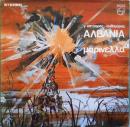
[1973]
Στίχοι / Testo / Lyrics / Paroles / Sanat:
Pythagoras
Μουσική / Musica / Music / Musique / Sävel:
Giorgos Katsaros
Ερμηνεία / Interpreti / Performed by / Interprétée par / Laulavat:
Marinella
'Αλμπουμ / Album: Αλβανία
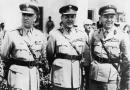
Agrinio è la città principale della regione Etolia-Acarnania. Sino al1832 era sotto il dominio turco con il nome di Vrahori. E’ la città natale dell’autore della canzone. Qualcuno del posto ha fatto delle ricerche concludendo che Pythagoras si è ispirato ad un episodio realmente accaduto durante la guerra italo-greca. Uno dei due ragazzi è stato identificato.
Era in corso una delle due battaglie che segnarono la disfatta del Regio Esercito italiano, la battaglia di Elea-Kalamas. Il tenente Andreas Tsigas , giovane ufficiale appena laureato, comandante di un plotone del 39° Reggimento Euzoni cadde nella difesa della collina di Grambala-Kalpaki il 16 Novembre 1940. [Riccardo Gullotta]