






Steal away, steal away, steal away to Jesus!
Steal away, steal away home,
I ain’t got long to stay here.
My Lord, He calls me,
He calls me by the thunder;
The trumpet sounds within my soul,
I ain’t got long to stay here.
Steal away, steal away, steal away to Jesus!
Steal away, steal away home,
I ain’t got long to stay here.
Green trees are bending,
Poor sinners stand a-trembling;
The trumpet sounds within my soul,
I ain’t got long to stay here.
Steal away, steal away, steal away to Jesus!
Steal away, steal away home,
I ain’t got long to stay here.
My Lord, He calls me,
He calls me by the lightning;
The trumpet sounds within my soul,
I ain’t got long to stay here.
Steal away, steal away home,
I ain’t got long to stay here.
My Lord, He calls me,
He calls me by the thunder;
The trumpet sounds within my soul,
I ain’t got long to stay here.
Steal away, steal away, steal away to Jesus!
Steal away, steal away home,
I ain’t got long to stay here.
Green trees are bending,
Poor sinners stand a-trembling;
The trumpet sounds within my soul,
I ain’t got long to stay here.
Steal away, steal away, steal away to Jesus!
Steal away, steal away home,
I ain’t got long to stay here.
My Lord, He calls me,
He calls me by the lightning;
The trumpet sounds within my soul,
I ain’t got long to stay here.
Contributed by Bartleby - 2012/1/12 - 13:54
Language: English
Steal Away - Harry Belafonte - 1960
Commovente ed accorata interpretazione di Harry Belafonte piena di tenero liricismo ["tender lyricism"] come si è espresso Langston Hughes nelle note di copertina dell’Album " My Lord What A Morning " del 1960 di cui il brano è la traccia n.11
Commovente ed accorata interpretazione di Harry Belafonte piena di tenero liricismo ["tender lyricism"] come si è espresso Langston Hughes nelle note di copertina dell’Album " My Lord What A Morning " del 1960 di cui il brano è la traccia n.11
Mmm-mmm, mmm-mmm-mmm-mmm-mmm-mmm-mmm [1]
Steal away, steal away
Steal away to Jesus
Steal away, steal away home
I ain't got long to stay here
Green trees are bending
Poor sinner stands a-trembling
The trumpet sound within my soul
I ain't got long to stay here
Steal away, mmm-mmm, mmm-mmm-mmm-mmm-mmm-mmm-mmm-mmm
Steal away home
I ain't got long to stay here
My Lord He calls me
He calls me by the thunder
The trumpet sounds within my soul
I ain't got long to stay here
Mmm, mmm-mmm, mmm-mmm-mmm-mmm-mmm-mmm-mmm-mmm
Steal away home
I ain't got long to stay here
Steal away, steal away
Steal away to Jesus
Steal away, steal away home
I ain't got long to stay here
Green trees are bending
Poor sinner stands a-trembling
The trumpet sound within my soul
I ain't got long to stay here
Steal away, mmm-mmm, mmm-mmm-mmm-mmm-mmm-mmm-mmm-mmm
Steal away home
I ain't got long to stay here
My Lord He calls me
He calls me by the thunder
The trumpet sounds within my soul
I ain't got long to stay here
Mmm, mmm-mmm, mmm-mmm-mmm-mmm-mmm-mmm-mmm-mmm
Steal away home
I ain't got long to stay here
[1] Nota.
STORY OF A SONG: STEAL AWAY
PETER BACON (TENOR) INVESTIGATES OUR REPERTOIRE. THIS MONTH: STEAL AWAY.
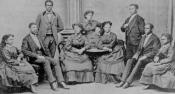
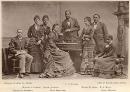
A classic American Negro Spiritual, Steal Away was composed by Wallace Willis, a slave, sometime before 1862. Alexander Reid, a minister, heard Willis singing it, transcribed the words and melody, and sent the music to the Jubilee Singers of Fisk University in Nashville, Tennessee. The Fisk Jubilee Singers were formed in 1871 at a school for freed slaves in order to help save the school from being closed. The choir toured America in order to raise money, and even came to Europe where they performed for Queen Victoria (more here).
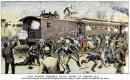
It is believed that songs like Steal Away and Wade In The Water had double meanings for the slaves who sang them. Not only did the words reflect their faith and that they would one day “steal away to Jesus” but also acted as code to their fellow workers that they were going to seek to escape their slave-owners, that they would “steal away” via the secret network called the Underground Railroad that would help them reach the northern U.S. states or Canada where they would be free.
One academic has suggested other lines in the song have this double meaning too. “He calls me by the thunder”, for example, refers to the fact that stealing away during a storm was safer because the rains washed away clues that might lead the trackers and their dogs to find the fleeing slave.
Fonte - Source
STORY OF A SONG: STEAL AWAY
PETER BACON (TENOR) INVESTIGATES OUR REPERTOIRE. THIS MONTH: STEAL AWAY.
A classic American Negro Spiritual, Steal Away was composed by Wallace Willis, a slave, sometime before 1862. Alexander Reid, a minister, heard Willis singing it, transcribed the words and melody, and sent the music to the Jubilee Singers of Fisk University in Nashville, Tennessee. The Fisk Jubilee Singers were formed in 1871 at a school for freed slaves in order to help save the school from being closed. The choir toured America in order to raise money, and even came to Europe where they performed for Queen Victoria (more here).
It is believed that songs like Steal Away and Wade In The Water had double meanings for the slaves who sang them. Not only did the words reflect their faith and that they would one day “steal away to Jesus” but also acted as code to their fellow workers that they were going to seek to escape their slave-owners, that they would “steal away” via the secret network called the Underground Railroad that would help them reach the northern U.S. states or Canada where they would be free.
One academic has suggested other lines in the song have this double meaning too. “He calls me by the thunder”, for example, refers to the fact that stealing away during a storm was safer because the rains washed away clues that might lead the trackers and their dogs to find the fleeing slave.
Fonte - Source
Contributed by Pluck - 2025/11/28 - 19:57
×
![]()
Note for non-Italian users: Sorry, though the interface of this website is translated into English, most commentaries and biographies are in Italian and/or in other languages like French, German, Spanish, Russian etc.

Scritta da Uncle Wallace Willis, un “liberto” entrato a far parte - come molti schiavi afroamericani emancipati – di una nazione indiana, nello specifico quella Choctaw (in Mississippi, Florida, Alabama e Louisiana ), che durante la Guerra civile si schierò con i Confederati.
Con Follow the Drinking Gourd, Go down, Moses e Swing Low, Sweet Chariot, quest’ultima scritta dallo stesso Wallace Willis, un’altra canzone sull’“Underground Railroad”, la rete di cammini segreti attraverso la quale, tra la fine del 1700 e la Guerra Civile, non meno di 30.000 afroamericani riuscirono a scappare dalla schiavitù.
Si ritiene che alcuni di questi “Negro Spirituals” celassero messaggi in codice o, comunque, come anche per molti canti di lavoro, servissero agli schiavi per comunicare tra loro senza essere compresi dai loro padroni ed aguzzini.
Nel caso specifico di “Steal Away”, poi, c’è chi sostiene che l’autore Wallis Willis non fece che riprendere le parole di un canto intonato come segnale di allarme e di pericolo durante la rivolta degli schiavi in Virginia nell’estate del 1831, quella capeggiata dal predicatore Nathaniel "Nat" Turner. In quell’occasione gli schiavi ribelli uccisero una sessantina di bianchi prima di essere catturati e giustiziati dallo Stato. Altre centinaia di neri morirono nei mesi successivi, trucidati nel corso degli innumerevoli linciaggi ad opera di gruppi di civili bianchi o di vere e proprie squadre della morte organizzate dai proprietari.
I Fisk Jubilee Singers, coro nero a cappella di voci femminili e maschili nato nel 1871 presso la Fisk University del Tennessee ed esistente a tutt’oggi., interpretarono questo brano, insieme a Go down, Moses, davanti alla Regina Vittoria, a Londra nel 1873, durante una tappa del loro primo tour europeo