Bob Marley, come si sa, scrisse questa canzone nel 1979, quando era già ammalato di cancro. Già due anni prima, nel 1977, gli era stato diagnosticato un melanoma maligno partito da sotto un'unghia dei piedi. Leggenda metropolitana vuole che la causa scatenante fosse stata una ferita riportata mentre giocava a calcio; in realtà, si trattava di un sintomo di un cancro già esistente. Scrisse così questa canzone, che nessuna storia, analisi o commento omette di definire particolare, quasi anomala nella sua produzione musicale: quasi nessuna traccia di reggae e, anzi, una ballata acustica, voce e chitarra, di stile “dylaniano”. Le storie, le analisi e i commenti di cui sopra concordano invariabilmente su un'altra cosa: quella di definire la
Redemption Song il testamento di Bob Marley. Il testamento, o la “summa” di tutta la sua arte, i suoi ideali e le sue credenze. Può darsi, ed è una cosa che molti artisti hanno desiderato fare a prescindere dal fatto che sapessero o meno di dover morire entro breve tempo. Quel che non molte storie, analisi o commenti , invece, non precisano, è che Bob Marley scrisse una vera e propria canzone religiosa, basata su ben precisi passi biblici e dal carattere addirittura liturgico.
Redemption Song è imbevuta di rastafarianismo, dalla prima parola fino all'ultima, nonché scritta in una forma moderata di quel particolare “pseudodialetto” dei Rasta, lo
Iyaric, o “Dread Talk”, basato in gran parte su usi sacralizzati del creolo inglese giamaicano.
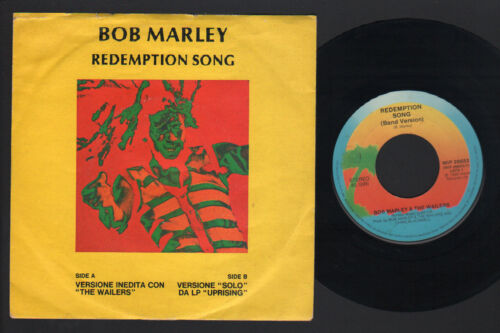
Non è esagerato affermare che Bob Marley si sentisse investito di caratteri sacerdotali (sebbene, formalmente, avesse ricevuto il "battesimo Rastafariano" soltanto poco prima della morte, assumendo il nome di Berhane Selassie) ; e questa canzone è, in ultima analisi, la canzone di un sacerdote che redige un vero e proprio Credo della sua religione. Non bisogna, a mio parere, dimenticare mai questa cosa, e occorre quindi ricondurre la
Redemption Song alla sua natura di canzone completamente inserita nel Rastafarianesimo. Ciò detto, non cessa di essere una canzone molto importante, oltre che bellissima e dai caratteri universali, in quanto, essenzialmente, un canto di Libertà. Percepita come tale anche -e molto- al di là della sua natura Rastafariana, è stata interpretata da tutti i migliori artisti del mondo. La parola “Redenzione”, poi, presenta un'attrattiva enorme nel suo stesso suono, ha carattere di vera e propria parola magica in quanto portatrice di speranza che va oltre la sua componente religiosa (il "popolo redento" è, ad esempio, una tipica e classica espressione anarchica).
Queste poche note supplementari sono a corredo del rifacimento totale della pagina (iniziato il 12 ottobre 2022, forse in una data non completamente casuale). Lascio qua sotto l'introduzione originale, basata in gran parte su considerazioni tratte da
Musica e Memoria, il benemerito e longevo sito di Alberto Truffi, con il quale tante cose abbiamo condiviso in vent'anni. Il rifacimento, senz'altro, è anche originato da fatti oggettivi; ad esempio, stabilire finalmente un testo chiaro e univoco, basato sull'ascolto attento della versione da album in studio. Sembra una cosa banale, ma per le canzoni più celebri della storia (e questa lo è, senz'altro) è in pratica una specie di chimera. Nel nostro piccolo di sito di storia e memoria, abbiamo sempre considerato la rigorosa esattezza testuale ben più importante della “grafica” o di altre baggianate del genere proprie di siti che, ad esempio, non sanno scrivere
fulfil e riempiono il mondo di
fullfill, fulfill, fullfil, e che non si accorgono che Bob Marley, nella terza strofa, canta
stop off the time, che è cosa diversa dal semplice
stop the time della seconda strofa. Sottoporre un testo a una restituzione il più possibile esatta pur accettandone le varianti, non lo si dovrebbe mai scordare, è principalmente un atto di amore e di rispetto.
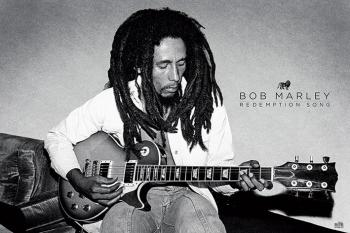
La canzone è l'ultima traccia dell'album
Uprising. Secondo la rivista
Rolling Stone, e pur ammettendo di non amare affatto le “classifiche” -che lasciano sempre il tempo che trovano- si posiziona al n° 66 nella lista delle 500 migliori canzoni di tutta la Storia (la classifica fu stilata nel 2004). Nella ristampa di
Uprising (2001), ne fu inserita una versione orchestrale, e versioni di ogni tipo ne sono state fatte e continuano ad essere fatte; ciononostante, la canzone rimane -giustamente- nella Storia per la sua semplice versione folk originale, chitarra e voce. Compilare una lista completa di chi la ha interpretata sarebbe del tutto impossibile; noialtri, qui, abbiamo voluto dare risalto alla versione di
Johnny Cash e Joe Strummer, forse l'unica che risulti alla pari dell'originale, ed interpretata dai due poco prima che anch'essi lasciassero questo mondo (un carattere che, comunque, non è certo assente dall'originale). Per il resto, onore e gloria e chiunque la abbia cantata, anche con eventuali gorgheggi e virtuosismi vocali che continuerò imperterrito a detestare, perlomeno in certe canzoni nelle quali ci stanno come il cavolo a merenda.
Una canzone di libertà scritta da un uomo giovane morente. Alla fine, tutto si riduce a questo pur tenendo conto della sua natura profonda. Fece in tempo a cantarla per la prima volta in concerto a Zurigo, il 30 maggio 1980, durante l'
Uprising Tour (che suonerebbe quasi come "rivolta itinerante"); morì esattamente un anno dopo, l'11 maggio 1981 a Miami. E' una canzone che resterà per sempre. [RV]
It is known that Bob Marley wrote this song in 1979, when he was already affected with cancer. Two year earlier, in 1977, he had been diagnosed with a malignant form of melanoma originating from under a toenail. An urban legend says the ultimate cause was an injury he suffered while playing football; in reality, it was only a symptom of an already existing cancer. So, he wrote this song which no history essay, analysis or commentary avoids calling particular and even anomalous in his musical production: it shows almost no trace of reggae and rather is an acoustic, guitar-and-voice, Dylan-style ballad. The above mentioned history essays, analyses and commentaries invariably agree on another fact, when they define
Redemption Song as Bob Marley's will. His will or the sum of all his art, ideals and beliefs. This may well be true: it is something that many artists have wished to do whether they knew or not they were going to die soon. Conversely, what most history essays, analyses or commentary usually omit to say is that Bob Marley wrote an authentic sacred song, based on definite passages from the Bible and even showing liturgical characters.
Redemption Song is deep rooted in Rastafarianism from the very first up to the last word, and is written in a moderate form of the peculiar pseudo-dialect of Rastafarians,
Iyaric or “Dread Talk” (mostly based on sacralized usages of Jamaica's English creole).
Although Bob Marley was baptized in the Rastafarian religion only few months before his death, taking the name of Berhane Selassie, he was fully conscious he was sort of priest, and this is no overstatement. All things considered, this is the song of a priest composing a full-fledged creed of his religion. In my opinion, this should never be forgotten and, so,
Redemption Song should be judged for its nature of Rastafarian song. It is nevertheless a very important song with all its beauty and universal and intrinsic character of a freedom song. It is perceived as such, even much beyond its Rastafarian nature, and as such it has been performed by practically all the best artists in the world. The word “Redemption”, then, is dramatically seductive for its very sound, a true magic word carrying hopes even vaster than any religion (for instance, the “redemption of the peoples” is a typical and classic expression of Anarchists).
These scant additional notes are intended for the total restructuring of this page (started on 12 October 2022, maybe not a fully accidental date). I leave here the original introduction, mostly based on notes taken from
Musica e Memoria (Music and Memory), Alberto Truffi's well-deserving and long existing website we have shared so much with, along twenty years of activity. The page restructuring originates from objective needs, e.g. establishing finally a clear and unequivocal song text based on careful and direct listening of the album studio version. This may well appear not so important, but, in practice, it is kind of pipe dream when the best known songs in history (and, no doubt, this is one) are concerned. Our insignificant, small website of history and memory has always considered punctilious text exactness much more important than “graphics”, glowing layouts, shiny templates and other, similar bullshit much loved by sites which do not know otherwise how to spell words like
fulfil and fill the world with fullfill's, fulfill's or fullfil's; or which do not notice that Bob Marley, in the 3d stanza of the songs, says
stop off the time, definitely different from the simple
stop the time of the 2nd stanza. Submitting a text to possibly accurate critical editing, though accepting all the variations that may always occur in true folksongs, is mainly an act of love and respect.
The song is the last track in the album
Uprising. According to
Rolling Stone -though I admit I am no fan of classifications or top charts- ,
Redemption Song occupies number 66 in the list of the 500 best songs in history (the classification was made in 2004). When
Uprising was reissued in 2001, an orchestral version was included, and version of all kinds have been made and still are. Nevertheless, the song remains firmly established in music history for its original folk, guitar-and-voice version. Making a complete list of its performers would be simply impossible; special attention has been drawn here to
Johnny Cash and Joe Strummer's version, maybe the only one that may equal the original and which, in addition to this, was performed by the two artists shortly before they left this world, as Bob Marley himself did. As for the rest, honour and glory should go to anyone has sung this song, even with occasional trills and virtuoso feats I never cease to detest -at least in songs where they are uncalled for.
A song of freedom composed by a dying young man. In the end, the song is this though considering its deep nature. Bob Marley had the time to sing it for the first time in the Uprising Tour concert of Zurich, on 30 May 1980. He died just one year later, on 11 May 1981 in Miami. An everlasting song. [RV]
"Redemption Song" was the last track on Bob Marley's ninth Island music album, Uprising. Marley was a pioneer in spreading the reggae music of Jamaica throughout the world; however "Redemption Song" is a simple folk song.
At the time he wrote the song, circa 1979, Marley had already been diagnosed with the cancer that was to later take his life, and according to Rita Marley, he was already, secretly, in a lot of pain, and was dealing with his own mortality, a feature which is clearly apparent on the album, and particularly on this song.
The song, like most of Marley's, took on his Rastafarian religious convictions head on, but also urges people to free themselves from their self-imposed mental shackles. The song has been covered by a wide and varied group of artists, including most notably Lauryn Hill, Arrested Development, U2, Joe Strummer, Life of Agony, Johnny Cash, Stevie Wonder, Dave Matthews, Majek Fashek, Christy Moore, Ian Brown, Ben Harper, Sweet Honey in the Rock, No Use for a Name, Manfred Mann, Marley's son Ziggy Marley (which features Irish Folk band The Chieftains) and Ms. Dynamite (which she performed at Live 8), which in itself bears testament to the huge fan base Marley had, and also the power of the song itself. At the 'Tribute to Heroes' concert, the concert held after the September 11, 2001 attacks, Wyclef Jean sang the song while draped in an American flag. Perhaps one of the most interesting variations, done by various Jewish youth groups, is coupling of the prayer "Mi Chamocha", which speaks of the exodus from Egypt, with the tune and chorus of "Redemption Song".
from
Wikipedia






Lyrics and music / Testo e musica / Paroles et musique / Sanat ja sävel:
Robert Nesta Marley / Berhane Selassie, commonly known as Bob Marley
Album: Bob Marley & The Wailers, Uprising [1980]
Queste poche note supplementari sono a corredo del rifacimento totale della pagina (iniziato il 12 ottobre 2022, forse in una data non completamente casuale). Lascio qua sotto l'introduzione originale, basata in gran parte su considerazioni tratte da Musica e Memoria, il benemerito e longevo sito di Alberto Truffi, con il quale tante cose abbiamo condiviso in vent'anni. Il rifacimento, senz'altro, è anche originato da fatti oggettivi; ad esempio, stabilire finalmente un testo chiaro e univoco, basato sull'ascolto attento della versione da album in studio. Sembra una cosa banale, ma per le canzoni più celebri della storia (e questa lo è, senz'altro) è in pratica una specie di chimera. Nel nostro piccolo di sito di storia e memoria, abbiamo sempre considerato la rigorosa esattezza testuale ben più importante della “grafica” o di altre baggianate del genere proprie di siti che, ad esempio, non sanno scrivere fulfil e riempiono il mondo di fullfill, fulfill, fullfil, e che non si accorgono che Bob Marley, nella terza strofa, canta stop off the time, che è cosa diversa dal semplice stop the time della seconda strofa. Sottoporre un testo a una restituzione il più possibile esatta pur accettandone le varianti, non lo si dovrebbe mai scordare, è principalmente un atto di amore e di rispetto.
Una canzone di libertà scritta da un uomo giovane morente. Alla fine, tutto si riduce a questo pur tenendo conto della sua natura profonda. Fece in tempo a cantarla per la prima volta in concerto a Zurigo, il 30 maggio 1980, durante l'Uprising Tour (che suonerebbe quasi come "rivolta itinerante"); morì esattamente un anno dopo, l'11 maggio 1981 a Miami. E' una canzone che resterà per sempre. [RV]
These scant additional notes are intended for the total restructuring of this page (started on 12 October 2022, maybe not a fully accidental date). I leave here the original introduction, mostly based on notes taken from Musica e Memoria (Music and Memory), Alberto Truffi's well-deserving and long existing website we have shared so much with, along twenty years of activity. The page restructuring originates from objective needs, e.g. establishing finally a clear and unequivocal song text based on careful and direct listening of the album studio version. This may well appear not so important, but, in practice, it is kind of pipe dream when the best known songs in history (and, no doubt, this is one) are concerned. Our insignificant, small website of history and memory has always considered punctilious text exactness much more important than “graphics”, glowing layouts, shiny templates and other, similar bullshit much loved by sites which do not know otherwise how to spell words like fulfil and fill the world with fullfill's, fulfill's or fullfil's; or which do not notice that Bob Marley, in the 3d stanza of the songs, says stop off the time, definitely different from the simple stop the time of the 2nd stanza. Submitting a text to possibly accurate critical editing, though accepting all the variations that may always occur in true folksongs, is mainly an act of love and respect.
A song of freedom composed by a dying young man. In the end, the song is this though considering its deep nature. Bob Marley had the time to sing it for the first time in the Uprising Tour concert of Zurich, on 30 May 1980. He died just one year later, on 11 May 1981 in Miami. An everlasting song. [RV]
"Redemption Song" was the last track on Bob Marley's ninth Island music album, Uprising. Marley was a pioneer in spreading the reggae music of Jamaica throughout the world; however "Redemption Song" is a simple folk song.
At the time he wrote the song, circa 1979, Marley had already been diagnosed with the cancer that was to later take his life, and according to Rita Marley, he was already, secretly, in a lot of pain, and was dealing with his own mortality, a feature which is clearly apparent on the album, and particularly on this song.
The song, like most of Marley's, took on his Rastafarian religious convictions head on, but also urges people to free themselves from their self-imposed mental shackles. The song has been covered by a wide and varied group of artists, including most notably Lauryn Hill, Arrested Development, U2, Joe Strummer, Life of Agony, Johnny Cash, Stevie Wonder, Dave Matthews, Majek Fashek, Christy Moore, Ian Brown, Ben Harper, Sweet Honey in the Rock, No Use for a Name, Manfred Mann, Marley's son Ziggy Marley (which features Irish Folk band The Chieftains) and Ms. Dynamite (which she performed at Live 8), which in itself bears testament to the huge fan base Marley had, and also the power of the song itself. At the 'Tribute to Heroes' concert, the concert held after the September 11, 2001 attacks, Wyclef Jean sang the song while draped in an American flag. Perhaps one of the most interesting variations, done by various Jewish youth groups, is coupling of the prayer "Mi Chamocha", which speaks of the exodus from Egypt, with the tune and chorus of "Redemption Song".
from Wikipedia
Zurigo, 30 maggio 1980 (registrazione originale)
Zurich, 30 May 1980 (original recording)
Una canzone quasi dilanyana, voce e chitarra senza quasi nessuna traccia di reggae, Redemption Song è il testamento spirituale di Bob Marley.
"There was a feeling of a whole era coming to a climax. Everyone felt that he knew something was going to happen"
(Rita Marley)
La prima strofa fa riferimento a una storia dell'Antico Testamento, quella di Giuseppe (Genesi, 37), che venne prima gettato in una cisterna dai fratelli e poi venne venduto come schiavo, ma fu fortificato da Dio, e dopo alcune peripezie divento viceré d'Egitto (Genesi, 41).
Inoltre, come nota Alberto Truffi in Musica e Memoria, i primi versi «si riferiscono ovviamente alla tratta degli schiavi in Africa. Come noto, mercanti locali, in genere arabi, dal '600 fino all''800 catturavano uomini e donne neri in tutto il continente africano, ed in particolare nel Golfo di Guinea, su commissione di imprenditori e latifondisti, sia dell'America del Sud che del Nord, e dei loro intermediari. Gli schiavi venivano utilizzati come manodopera a bassissimo costo per coprire la carenza di manodopera locale, dovuta alla distanza dai rispettivi paesi coloniali e alla impossibilità di utilizzare come forza lavoro le popolazioni americane autoctone. Nell'America del Sud infatti gli indios, pur ridotti in schiavitù e utilizzati per ogni tipo di lavoro (nonostante la opposizione parziale di alcuni ordini religiosi, come i Gesuiti - si veda il celebre film The Mission) avevano dimostrato una scarsa resistenza fisica ed erano stati in gran parte sterminati dalle privazioni e dalle malattie. Nell'America del Nord invece le popolazioni locali, i cosiddetti "pellerossa" hanno opposto in tutta la fase coloniale una totale resistenza a qualsiasi forma di omologazione e di schiavitù, fino ad essere quasi sterminati e ridotti in prigionia nelle cosiddette "riserve". Erano in ogni caso in numero insufficiente per le esigenze del nuovo mondo.
Nei versi successivi viene brevemente riassunta la tipica modalità di cattura che ha portato nel nuovo mondo gli antenati dei neri d'America, tra cui i gli antenati di Marley in Giamaica.».
Ancora da "Musica e Memoria": Redemption significa alla lettera "redenzione", quindi liberazione dal peccato attraverso una vita giusta o la penitenza. Ha anche però il significato di liberazione dalla condizione di schiavitù, ed in tal senso è utilizzata ad esempio per definire la liberazione del popolo ebreo, condotto da Mosè nella terra promessa dopo gli anni di schiavitù in oggetto.
Song significa qui qualcosa di più della semplice "canzone", piuttosto un canto nel quale si riconosce e si identifica un popolo oppresso, un salmo che ha lo scopo di avvicinare all'Onnipotente, una preghiera corale.
The Redemption Song video was created by French artists Octave Marsal & Theo De Gueltzl. Marsal & De Gueltzl’s breathtaking animation, featuring 2747 original drawings, uses powerful symbols to amplify the magnitude of the song’s timeless lyrics and importance in today’s world. The video highlights Bob’s contribution to the empowerment of black civilization, as well as his manifestation of hope and recovery for all mankind. Inspired by Bob’s homeland of Jamaica, as well as insights received from his family, the artistic approach was to illustrate the imaginary world of Bob Marley in a way that highly stimulates self-reflection.