


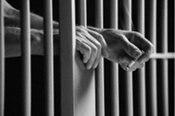


I was born in Missouri, across the line of Arkansas, yes I was
I didn't have any money, so I got in trouble with the law
This is what they did, y'all, listen
They sent me to Cummins, down on Cummins Prison Farm (1), oh yes they did
Down there I started thinking, I thought I tell you some of it in this song
This is part of it, hear y'all, listen
Had been there for one day, and I learned that you don't play, oh no you don't
All you wake up one morning, yes you will, find yourself in a unmarked grave, oh yeah oh yeah
I told the warden I'll be a good man, if you only free me from this pen, oh yes I will
Said the warden I'll be a good man, if you only free me from this pen, oh yes I will
The warden look me in the eye, said down "Here son, we have a lot of good men", oh yes he did
Talking about Cummins, oh yes I am, talking about Cummins Prison Farm, oh yes I am
Talking about Cummins, oh yeah, talking about Cummins Prison Farm,
oh, yeah
Now you heard part of my story, I'm not the only one
(1) si tratta di un carcere statale situato in Arkansas, contea di Lincoln, aperto nel 1902 e tristemente noto per le condizioni brutali e il lavoro forzato dei detenuti nei campi. Attualmente ospita anche la camera delle esecuzioni capitali dello stato.
Per un tragico caso del destino Calvin Leavy verrà incarcerato proprio a Cummins 24 anni dopo questa registrazione, e morirà in carcere dopo 18 anni di detenzione.
Per un tragico caso del destino Calvin Leavy verrà incarcerato proprio a Cummins 24 anni dopo questa registrazione, e morirà in carcere dopo 18 anni di detenzione.
Contributed by Marcello Tagliabue - 2026/9/20 - 11:33
Language: English
Cummins Prison Farm - Lefty Dizz - 1979
Versione di Lefty Dizz (1937-1993), chitarrista e cantante blues afro-americano di Chicago, che oltre a essere frontman della sua band suonò anche con altri bluesmen, come Junior Wells e J.B. Lenoir.
Lefty Dizz (vocals & guitar)
Wille James Lyons (guitar)
Big Moose Walker (piano)
Mojo Elem (electric bass)
Odie Payne (drums)
Chicago, June 8, 1979
Wille James Lyons (guitar)
Big Moose Walker (piano)
Mojo Elem (electric bass)
Odie Payne (drums)
Chicago, June 8, 1979
">
I was born in Missouri, across the line from Arkansas
I was born in Missouri, across the line from Arkansas
Due I didn't make too much money, I got in trouble with the law
You know that's the meanest prison, down on Cummins Prison Farm
Lord, the meanest prison, down on Cummins Prison Farm
You know I didn't know too much about it, I'm gonna tell you a little bit in this song
When I got down there first day, I found out they don't play
I got down there and first day, I found out they don't play
If you wake up early one morning, in a cold [...] on my grave
I said "Warden I'll be a good man, if you release me from this pen",
Shouting out "Warden I'll be a good man if you release me from this pen",
He looked at me with a strange smile, "Down here we've got a whole lotta good men"
I'm talking about Cummins, down on Cummins Prison Farm
Down you know, Cummins oh no, down on Cummins Prison Farm
You know I didn't know too much about it, I'm gonna tell you a little bit in this song
Cummins, I'm talking about Cummins
I'm talking about Cummins, down on Cummins Prison Farm
You know I didn't know too much about it, I'm gonna tell you a little bit in this song
Contributed by Marcello Tagliabue - 2026/9/23 - 11:43
×
![]()
Note for non-Italian users: Sorry, though the interface of this website is translated into English, most commentaries and biographies are in Italian and/or in other languages like French, German, Spanish, Russian etc.

Calvin Leavy (vocals & guitar), Robert Tanner (lead guitar), Hosea Leavy (bass), Maurice Haygood (drums), Ted Seibs (organ)
Little Rock, Arkansas, 1968
Una storia di povertà e emarginazione che porta al carcere. Una canzone che denuncia le dure condizioni della colonia penale di Cummins; nella terza strofa si accenna anche all'uccisione di detenuti da parte delle guardie carcerarie ('Ho imparato subito che lì non si scherza/ti svegli una mattina e ti ritrovi in una tomba senza nome'). Poi il protagonista chiede al direttore della prigione di essere liberato dietro la promessa di diventare una brava persona, e il direttore risponde beffardamente che' lì dentro ci sono un sacco di brave persone'.
I interviewed Billy Cole in 2011 while researching a song of his titled “Fouke Monster,” a wacky hard rock tune about the Bigfoot sightings in Fouke, Ark. in the early 70s. During the interview, Cole spoke about “Cummins Prison Farm” by Calvin Leavy, which became a Top 40 r&b hit in 1970. Although there’s been a lot of misleading and contradictory information surrounding the song, including the approximately 17 people who have tried taking credit for writing and producing it, Cole is listed as the principal songwriter, and he wanted to reveal the story behind it from his perspective.
Cole told me that he was hanging out with a musician friend named B.B. Turner, who lived in the Dixie Addition in North Little Rock, a predominately black neighborhood, in 1968. Turner asked Cole to come with him to confront a guy who owed him $20 at a pool hall on Washington Avenue. When they got there, Turner spotted the guy and the situation quickly became heated. Then, an elderly black man stepped in and asked what all the fighting was about, pointing out that killing each other for $20 was a horrible mistake. He pulled out a few ones and some loose change and gave it to Turner, telling him that if he’d come back every four or five days, he’d give him what he had and soon enough he’d have his $20 back. This broke the tension and Turner agreed.
As they were beginning to leave, the elderly man called out to Cole, who went over to the man and sat down. He asked Cole if he was the guy who wrote songs. The man said that Cole needed to write a song about his life. He was born in Missouri and moved to Arkansas, his father was a preacher and a good man. He wound up with no money and got in a little trouble with the law and was sent to Cummins without much of a trial. He tried talking to the wardens, but their only reply was: “There’s a lot of good men on that hill.” Turner took Cole to his grandmother’s house in Dixie, they sat down with two guitars and Cole rhymed the old man’s story. Within ten minutes the song was finished.
Around 1969, Calvin “Slim” Leavy, who was born in Scott, Ark. and moved to Fresno, Calif. in the 60s, returned home and took a regular gig at Club 70, a nightclub in North Little Rock on highway 70. The club’s owner, Mr. Penny, wanted to help Leavy find some other gigs in town, so he agreed to pay for a recording session. Mr. Penny called Cole and asked if he could help them cut a record. He was a regular at E&M recording studio in Little Rock on Markham and agreed to help out.
Another regular at the studio was a young guitarist named Robert Tanner. Cole asked for Tanner’s help to put together a band since only Calvin and his older brother Hosea would be coming to record. Tanner called his friend, Ted Seibs, to play Hammond B3 organ. Tanner then called Maurice Haygood, a black drummer and former band mate from The Groovin’ Kind, one of the first integrated bands in central Arkansas in the mid 1960s. Everyone assembled at the studio and Cole played a demo recording of “Cummins Prison Farm.” Leavy was drawn to the song since two of his brothers, Blackey and Manley, were imprisoned there.
I spoke with Tanner and Seibs, who confirmed the legend that the song was cut in one take. Hosea was on bass, Seibs on organ, Haygood on drums, Calvin played rhythm guitar and lead vocal, and Tanner played the searing lead guitar part.
Earl Fox, the owner of E&M recording studio, told me that a copy of the master tape was made for Leavy. This dub was taken to the r&b radio station just a few doors down from the studio named KALO. The tape was played on the air and started generating a buzz, but there wasn’t a record pressed yet. Fox said that the dub of the session was used by Calvin Brown, Leavy’s manager, to make a 45 of the song and released on Brown’s label, Soul Beat Records, located in Stuttgart in 1969. After selling several thousand copies, the record was picked up from Brown by Shelby Singleton, a legendary record producer in Nashville, and released on his Blue Fox label, which skyrocketed the record to a nationwide blues hit in 1970.
Cole told me that when the song rose to popularity, he got a check for the royalties and took it to the pool hall and found the old man whose story inspired the song. Cole said he remembered him and they went to the bank, cashed the check, and Cole gave the old man half the money. When the second check arrived six months later, Cole went back to the pool hall, but the old man had passed away.
The story of “Cummins Prison Farm” took a tragic turn in 1992 when Calvin Leavy was convicted under the newly passed “drug kingpin” law in Arkansas. According to the report, Leavy paid an undercover cop for information about upcoming raids. Leavy’s punishment was harsh, receiving a life sentence plus twenty five years to Cummins Prison under the controversial new law, in which he was the first person convicted. Leavy was later moved to a treatment facility for diabetes and fought his conviction. His sentence was reduced to 75 years by Gov. Huckabee, but Gov. Beebe denied his request for clemency.
Leavy died at Jefferson Hospital in Pine Bluff in 2010 while in custody. He would have been up for parole one year later. Billy Cole died on September 1, 2012. This article is dedicated to them both.
(Psych of the South: Calvin Leavy's 'Cummins Prison Farm', by Harold Ott, January 29, 2015)
Harold Ott is the founder and primary researcher of "Psych of the South", a record label dedicated to unearthing rare Arkansas pop history.